Headlines News :
Tampilkan postingan dengan label MOBILEPHONE. Tampilkan semua postingan

Review Motorola Defy Pro Smartphone Tough and Classy

The Motorola Defy Pro has a strong resemblance to a BlackBerry model, but adds IP67 certification which means it is resistant to spills and dust. The Motorola Defy Pro offers a 2.7 inch touchscreen made from Gorilla Glass and is built to take all the abuse that someone with an active lifestyle heaps upon his smartphone.

Speaking of active lifestyles, the Motorola Defy Pro has a special dashboard that helps you track specific outdoor activities such as camping, hiking and a daily workout. There is both a 5MP rear-facing camera and a VGA shooter on front for self-portraits and video chat. Android 2.3 is installed.

Motorola Defy Pro Smartphone Tough and Classy

Whether it’s the rain or a clumsy cocktail, a sandy beach or a pocket full of change, the MOTOROLA DEFY PRO is ready for whatever life throws your way. It's dustproof and water resistant, with a Corning® Gorilla® Glass display that resists scuffs and scratches too. And with its large capacity (1700 mAh) battery, it’s up to you when the fun stops, not your phone.

MOTOROLA DEFY PRO is not only smart, it's fun! It has our advanced user interface, featuring customizable activity dashboards. The Social Graph grants instant access to your most frequently contacted friends, while the Activity Graph displays your most actively used apps.

Motorola Defy Pro Smartphone Tough and Classy

Your active lifestyle demands it, and the MOTOROLA DEFY PRO delivers, with front- and rear-facing cameras that allow you to both show and tell. Use the webcam on front, for video chat, or the quality 5 MP camera with auto-focus, LED flash and 4x digital zoom, for great pictures and videos you can easily save or share.

MOTOROLA DEFY PRO has all the functionality you'd expect from a smartphone, plus access to infinite entertainment choices via Google Play™, where there are more than 600,000 apps, games, books and videos at your disposal. It's a complete digital universe, right there in your pocket.

Motorola Defy Pro Smartphone Tough and Classy

Never miss a meeting (or anniversary) with MOTOROLA DEFY PRO, your lifeline to logistics. Use it as a personal planner, to coordinate your work schedule with family play. A specialized instrument dashboard helps you track specific outdoor activities, with camping, hiking and daily workout views.

When the day is done and it’s time to chill, MOTOROLA DEFY PRO will have plenty of power left in its high capacity battery to entertain. There's an integrated music player and easy-to-use interface, for instant access to your favourite songs.

Motorola Defy Pro XT560 Specification


Datasheet;Views: 7819 views since addition of datasheet (July 06, 2012)
Datasheet;State: Final specifications
Release+Date: July, 2012
Dimensions: 66 x 110.8 x 12.35 millimetres
Mass: 116 grams (battery included)

Software:Environment

Embedded;Operating+System: Google Android 2.3.7
Browse devices running this OS

Microprocessor,;Chipset

CPU;Clock: 1000 MHz
CPU: Qualcomm MSM7227A
Browse devices based on this microprocessor

Memory,:Storage+capacity

RAM+capacity: 512 MiB
ROM;capacity: 1 GiB

Display

Display:Type: Supported
Display-Diagonal: 2.7 "
Display:Resolution: 480 x 320

Sound

Microphone(s): mono
Loudspeaker(s): mono
Audio:Output: 3.5mm

Cellular:Phone

Cellular-Networks: GSM900, GSM1800, GSM1900, UMTS850 (B5), UMTS2100 (B1)
Cellular-Data_Links: GPRS, EDGE, UMTS, HSDPA, HSUPA
Call+Alert: 64 -chord melody
Vibrating-Alert: Supported
Speakerphone_: Supported

Control+Peripherals

Positioning;Device: Multi-touch screen
Primary;Keyboard: Built-in QWERTY-type keyboard
Directional_Pad: Not supported
Scroll+Wheel: Not supported

Interfaces

Expansion_Slots: microSD, microSDHC, TransFlash
USB: USB 2.0 client, 480Mbit/s
micro-USB
Bluetooth: Bluetooth 3.0
Wireless:LAN: 802.11b, 802.11i, 802.11g, 802.11n
Infrared_Gate: Not supported

Multimedia+Telecommunication

Analog-Radio-Receiver: FM radio (76-90MHz) with RDS
Digital+Media+Broadcast-Tuner: Not supported

Satellite:Navigation

Built-in:GPS-module: Supported
Complementary:GPS+Services: Assisted GPS, QuickGPS, Geotagging

Built-in+Digital;Camera

Main-Camera: 5 MP
Autofocus+(AF): Supported
Optical;Zoom: 1 x
Built-in-Flash: mobile light (LED)
Secondary;Camera: 0.3 MP

Additional+Details

Built-in;accelerometer: Supported
Ingress:Protection;Level: IP67
Battery: removable
Battery+Capacity: 1700 mAh

Review and Specifications Nokia Lumia 800 Details

Products Nokia Lumia 800 is the best breakthrough Nokia at the moment. Lumia 800 not less hebaat from other Android phones and iPhones. But very, very unfortunate, and I am very sorry about this, that Lumia 800 does not have a secondary camera, and so can not do video calling. This is similar to the existing N9 is perfect, there is a secondary camera but not able to do video calling. In my opinion, the decision taken by Nokia of late very great, but it was too frivolous.

Why Nokia did not dare to release a perfect product as well as what Apple can give perfection during this time, why be postponed. Should additional facilities and a secondary video calling camera does not need to be added to the product Lumia 900. Lumia 900 only comes with an extra minimal, there is no significant innovation. Lumia 800 was great, but a bit disappointing owners were ultimately unable to reconcile Lumia 800 miilknya with Android phones and the iPhone belonged to someone else. It is unfortunate.

Nokia lumia is a phone that is pretty good considering that the processor is the processor used in the above average as well as how to use a fairly good and completeness is laudable.


Review and Specifications Nokia Lumia 800 Details
Nokia Lumia 800

Unfortunately the level of applications and games, nokia lumia still not perfect considering the number of paid games and at least a game that has graphics high definition (HD), an even number of games with high definition graphics on the nokia lumia still less than the number of Symbian, but it still nokia lumia need to focus on in terms of payment that can be changed quickly with the rupiah currency and payment via mobile phone.

If nokia lumia was able to have a game with high definition graphics quality a lot, obviously nokia lumia will be much better and have a lot of interest in considering the use of basic nokia easier and operation of windows that are currently the majority, obviously it is inversely proportional to the android and apple with basic operations difficult. coupled with the ease of mobile repair nokia, nokia lumia obviously is a perfect phone if it has apps and games are more and more good, especially in terms of graphics.


Full Specifications of Nokia Lumia 800
GENERALNetworkGSM 850 / 900 / 1800 / 1900, 3G HSDPA 850 / 900 / 1900 / 2100
SCREENTipeAMOLED capacitive touchscreen, 16M colors
Ukuran480 x 800 pixels, 3.7 inches (~252 ppi pixel density) Multitouch, Corning Gorilla Glass - Nokia ClearBlack display
DIMENSIUkuran/Berat116.5 x 61.2 x 12.1 mm, 76.1 cc / 142 g
AUDIOFiturVibration MP3, WAV Ringtones
Jack3.5mm jack audio
SpeakerphoneYa
MEMORYInternal16 GB storage, 512 MB RAM
EksternalTidak
DATA3GHSDPA 14.4 Mbps, HSUPA 5.76 Mbps
EDGEClass 33
GPRSClass 33
WLANWi-Fi 802.11 b/g/n
Bluetoothv2.1 with A2DP, EDR
InfraredTidak
USB/PortmicroUSB v2.0
CAMERAPrimer8 MP, 3264x2448 pixels, Carl Zeiss optics, autofoc
SekunderTidak
Video Record720p@30fps
BATERAITipeStandard battery, Li-Ion 1450 mAh (BV-5JW)
StandbyUp to 265 h (2G) / Up to 335 h (3G)
Talk TimeUp to 13 h (2G) / Up to 9 h 30 min (3G)
FITUROSMicrosoft Windows Phone 7.5 Mango
CPUQualcomm MSM8255 Snapdragon, 1.4 GHz Scorpion, GPU Adreno 205 Sensors: Accelerometer, proximity, compass
BrowserWAP 2.0/xHTML, HTML5, RSS feeds
GPSwith A-GPS support
MessagingSMS (threaded view), MMS, Email, Push Email, IM
JavaJava: Tidak Fitur Lain: - MicroSIM card support only - SNS integration - Active noise cancellation with dedicated mic - Document viewer/editor - Video/photo editor - Voice memo/command/dial - Predictive text input
OTHER FEATURESMultiple SIMMicro SIM
Video PlayerMP4/H.264/H.263/WMV player
MP3 Player- MP3/WAV/eAAC+/WMA player
Audio RecordYa
TVTidak

Prices and Specifications Latest Nokia E6

Latest Nokia E6
Prices and Specifications Nokia E6 Gallery - Nokia E6 is the successor of the Nokia E71 and Nokia E72 are unique with a full Qwerty keyboard and a high resolution touch screen. Designed using premium materials such as glass and stainless steel, the device comes in the right size for easy use with either one or two hands.

Nokia E6 mobile phone with dimensions of 115.5 x 59 x 10.5mm with a weight of 133 g is not only tasty and sturdy when gripped. Casing material is a combination of glass and steel, so it looks solid and elegant.

CellPhone Nokia E6 operates in quad-band 2G and five-band 3G. In addition, the Nokia E6 offers high-speed HSDPA network capabilities are claimed to be able download speeds up to 10.2Mbps and upload speeds of 2Mbps (HSUPA). Nokia E6 uses the latest Symbian platform together with the Symbian Anna Nokia X7.


GENERAL
2G Network GSM 850 / 900 / 1800 / 1900
3G Network HSDPA 850 / 900 / 1700 / 1900 / 2100
Announced 2011, April
Status Coming soon. Exp. release 2011, Q2
 

SIZE
Dimensions 115.5 x 59 x 10.5 mm, 66 cc
Weight 133 g
 

DISPLAY
Type TFT capacitive touchscreen, 16M colors
Size 640 x 480 pixels, 2.46 inches
- QWERTY keyboard
- Multi-touch input method
- Accelerometer sensor for auto-rotate
- Proximity sensor for auto turn-off
 

SOUND
Alert types Vibration, MP3, WAV ringtones
Loudspeaker Yes
3.5mm jack Yes
 

MEMORY
Phonebook Practically unlimited entries and fields, Photocall
Call records Detailed, max 30 days
Internal 8 GB storage, 256 MB RAM, 1 GB ROM
Card slot microSD, up to 32GB
 

DATA
GPRS Class 33
EDGE Class 33
3G HSDPA 10.2Mbps, HSUPA 2.0Mbps
WLAN Wi-Fi 802.11 b/g/n
Bluetooth Yes, v3.0 with A2DP
Infrared port No
USB Yes, v2.0 microUSB, USB On-the-go support
 

CAMERA
Primary 8 MP, 3264x2448 pixels, fixed focus, dual-LED flash
Features Geo-tagging, face detection
Video Yes, 720p@25fps
Secondary Yes, VGA
 

FEATURES
OS Symbian Anna OS
CPU 600 MHz ARM 11 processor, 2D/3D Graphics HW Accelerator with OpenVG1.1 and OpenGL ES 2.0
Messaging SMS, MMS, Email, Push Email, IM
Browser WAP 2.0/xHTML, HTML
Radio Stereo FM radio with RDS
Games Yes + downloadable
Colors Black, White, Silver
GPS Yes, with A-GPS support
Java Yes, MIDP 2.1
- Active noise cancellation with dedicated mic
- Digital compass
- TV-out
- MP4/H.264/H.263/RV player
- MP3/WMA/WAV/RA/eAAC+ player
- QuickOffice document editor (Word, Excel, PowerPoint, PDF)
- Organizer
- Flash Lite 4.0
- Voice command/dial/commands
- Predictive text input
 

BATTERY
 Standard battery, Li-Ion 1500 mAh (BP-4L)
Stand-by Up to 681 h (2G) / Up to 744 h (3G)
Talk time Up to 14 h 48 min (2G) / Up to 7 h 30 min (3G)

HTC Wildfire review and Spesification

The hardware of the HTC Wildfire isn't exactly 'jaw dropping,' but still great for an 'entry-level' handset for folks on a budget. Specs include a 5 MP camera with geo-tagging & auto-focus, 3.2" inch capacitive that supports multi-touch and gesture input and packed with Android 2.1 Eclair definitely showing the Wildfire is the successor to HTC's other budget phone - the Tattoo.

A fun fact about this phone is the name -HTC ran an online poll to decide what the handset should be called and "Wildfire" came out on top. The name ends up all too fitting.

The HTC Wildfire features HTC's typically fresh stylings, which include an optical trackpad for navigation. It has since seen its successor in the HTC Wildfire S.

The HTC Wildfire smartphone has a very similar design to the Desire, albeit in a smaller, more pocketable form factor. Despite targeting a young, budget-conscious audience, the Wildfire's build quality hasn't taken a hit; HTC has once again employed an attractive combination of brushed metal and solid feeling plastics. Like its more advanced sibling, the Wildfire is a delight to hold and has a distinctive slightly curved "chin". It comes in black and white variants, with the latter exclusively sold through Fone Zone stores on post-paid plans until 28 September, before it is available from all Telstra stores and partners.

The HTC Wildfire includes the same responsive optical trackpad seen on the Desire. Above it are four touch-sensitive keys — home, menu, back and search. They work well enough, but the lack of backlighting means using them at night is problematic. A physical power/lock button on top and left mounted volume controls complete the physical controls.
HTC Wildfire

HTC has kept the handset's price down by cutting a few corners with the HTC Wildfire's display, opting for a regular TFT LCD screen rather than the excellent AMOLED display used by phones like the Desire and the Legend. The result is a low-resolution display that's hard to see in direct sunlight and has poor viewing angles, but at this price, its hard to complain. It uses capacitive touchscreen technology, so it's already a step ahead of some other budget Google Android phones, such as LG's Optimus.

The capacitive touchscreen makes text input a positive experience, and the Wildfire's on-screen keyboard is well designed. Keys are slightly smaller and more cramped than the Desire, but the responsive screen, haptic feedback and excellent spelling correction aid the experience. Our main complaint is slight keystroke lag when typing quickly — the Wildfire is a little sluggish at keeping up with your taps, often taking half a second to register keystrokes on the screen.

The HTC Wildfire runs the 2.1 version of Google's Android operating system and it includes all the regular features and functions of more expensive Android smartphones. Access to the Android Market for third-party apps, an excellent notifications taskbar and automatic and seamless synchronisation with Google services are all part of the experience, as is HTC's Sense UI. The Wildfire can have up to seven home screens for live widgets and shortcuts, and you can pinch the screen to quickly display them and select an active screen.

The Sense UI includes HTC's Friend Stream, which integrates all of your social-networking contacts, including from Facebook, Twitter and Flickr, into one organised "stream" of updates; People, which combines all forms of contact with an individual in your phonebook; as well as News, Facebook, Web Bookmarks and HTC's much-loved weather widget. Finally, Footprints allows you to take a geotagged photo and store the image in a particular category, then instantly share it with others via email.

The HTC Wildfire has a few exclusive features, headed by a "next generation caller ID" function that allows you to see Facebook updates and birthday information when making or receiving a call. The Wildfire also has the ability to import contacts and calendar entries from your old mobile phone via Bluetooth, and includes HTC's Sync software for music synchronisation with your PC.

One of the more impressive features is Swype text input, an option that allows you to slide your fingers over the letters you want to type in a single motion, letting the software work out the word you are trying to write. Swype is an excellent feature and considering the smaller screen size of the HTC Wildfire compared to the Desire, it’s a very smart and thoughtful inclusion.

Although the HTC Wildfire is capable of almost everything the Desire is, most tasks take a second or two longer. In addition to the keystroke lag while text messaging, the Wildfire also chugs along when browsing through images in the gallery, loading web pages, playing videos and taking photos with the 5-megapixel camera. We've clearly been spoiled by playing with faster, more expensive Android smartphones, so the HTC Wildfire's sluggishness is a tad frustrating. When you consider its price though, these minor issues are much easier to live with and are a small compromise to pay for a handset that offers outstanding value for money.

The HTC Wildfire's camera has autofocus and flash, and doubles as a video recorder, but video playback on such a low resolution display isn't ideal. Other standard features include a built-in accelerometer, a digital compass and a GPS receiver, while the web browser displays Flash content and supports multitouch zooming. The Wildfire also has a microSD card slot for extra storage, located behind the rear battery cover.
A real positive of the HTC Wildfire is its battery life. No doubt partly thanks to the low-resolution display, the Wildfire managed to last more than a full day with moderate use — placing it ahead of the iPhone 3GS and HTC's own Desire and HTC Legend smartphones.

Sony Xperia P LT22i Dual Core Review

Sony Xperia P LT22i Dual Core
Sony Xperia P which is the latest generation NXT Series after of Sony Xperia S. This is evident from the slick design carries. Maturity design starts from a packaged sales packaging simple, and efficient. Hold Xperia P for the first time, you will certainly remember his brother body design with which is Sony Xperia Sola. Yups, is somewhat similar, except that the dimensions of the Xperia P larger, wider screens, and there is a transparent strip at the bottom of the phone.

Four corners of a square phone aristocrats, like Hershey’s chocolate sticks. Things are quite unique is Transparent Strip featuring touchkeys towards Back, Home, and Settings. If Sony had the courage to try out most of his body with a transparent section, it is not complicated on the next few years Sony will launch a full transparent phone instead?

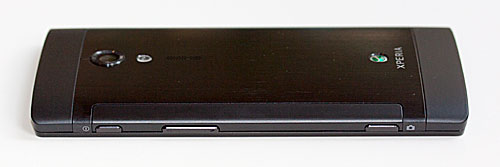
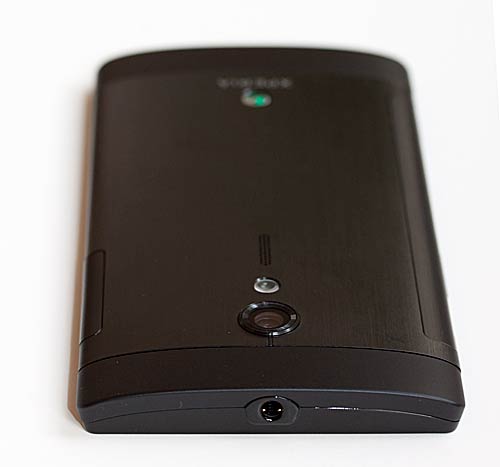
Unibodynya impressively simple design, with a few key aide at his side, which is volume buttons, power button, camera shutter. Not only that, a USB port, speaker hole, HDMI port and hotswap on pinned on the right side. At the back of the phone, there is an LED flash, the camera hole, NFC sticker scanner and the Sony logo. While at the top of the phone, there is a 3.5mm audio jack.

Screen and InterfaceLED-backlit LCD, capacitive touchscreen, 16M colors; 540 x 960 pixels, 4.0 inches (~275 ppi pixel density); Multitouch; Scratch-resistant glass; Sony WhiteMagic technology; Sony Mobile BRAVIA Engine ; Timescape UI

Finishing the screen on this phone is also stylish, with a wide cross-section of 4-inch, 16 million color LCD screen adds to passion for you to browse each page on this phone. Multitouch capacitive touch screen works. Displacement smooth and zippy pages that perform well under finger pressure though.
The quality is quite optimal screen brightness, even when PULSE trials in the sun still bright, it’s not because of the presence of Sony White Magic Technology. Sony Xperia P uses Android 2.3.7 OS and Timescape UI for a slick interface, with a pleasant user experience.

From the page menu is well laid out, with five screens homescreen shortcut for the choice of well-appointed, includes interactive widgets, shortcuts and folders storage applications. Go to page menu, you will find 3 pages menu is arranged in a grid. This amount could be increased later as the increasing number of applications that you are stuffed.

Pushing comfort entertainment sector, Sony Xperia P provides the hardware and software features, as well as access to a shortcut on the homescreen, the Media folder offers quick access to picture galleries, inbuilt music player, FM radio and camera. Although these features can be accessed easily enough through the main menu, the availability on the home page are quite fun and adds to the experience of inclusion.Hardware
CPU Hardware: RionGrande; Dual core ARM v7 Processor (VFPv3,NEON)/ 1GHz; GPU renderer: Mali 400MP; RAM : 772MB; OS: Android v2.3.7

Relying on dual processor, with a frequency of 1 GHz CPU, Xperia P promises a fairly comfortable in venturing into the virtual world. The process of loading and loading pages, progresses rapidly, and do not hang in the middle of the road.

Internet and Connections

Data: GPRS Up to 100 kbps/ EDGE Up to 296 kbps; Speed: HSDPA 14.4 Mbps, HSUPA 5.76 Mbps Koneksi : WLAN Wi-Fi 802.11 b/g/n, Wi-Fi hotspot, DLNA Bluetooth Yes, v2.1 with A2DP, EDR NFC ,USB, microUSB v2.0, USB On-the-go support.

An integral part of the modern smartphone is Internet capability. Sony Xperia P has the performance and reasonably good performance of its class, with a variety of features to enhance the browsing experience. Sony Xperia P through a browser, either via 3G or Wi-Fi internet connection, capable of displaying web pages quickly.

Once page is available image and sharp text with the presence of flash that integrates the ability to display video. Process each page scroll running smoothly, and to do multitabs.

Through Live Ware Manager, Smart Tags and your desired setting, along with his action you have the opportunity to open a second shortcut with NFC technology. With Shortcuts you can open from contacts, gallery, calculator, to your favorite web page. For the record, the NFC capability will not only be used fellow Sony but also other smartphones that support NFC.

Unique FeaturesOffice Suite; Neo Reader, EA Games (Tiger Woods PGA 2012 Dead Space, Need Fot Speed, Plants vs Zombies), Media Remote, ASTRO, Wisepilot
For those of you who are mobile, and want to get all the information quickly through barcode, P Xperia Neo features the Reader that allows you to scan / scan barcodes for mobile then displays the information you need. During scanning, the phone you have the internet connection. There are also ASTRO File Manager which is a feature of modern highly complex and complete. In it, you can set up and there are various panels that help you search for the desired file.

Camera

Primary 8 MP, 3264×2448 pixels, autofocus, LED flash Features Geo-tagging, touch focus, face and smile detection, 3D sweep panorama, image stabilization Video, 1080p@30fps, continuous autofocus, video light ; SecondaryCamera: VGA
Quality camera carried by the Sony Xperia P, can not be taken lightly. Image in the room at the shoot under LED lighting is sharp enough and not over the flash compensation. While in natural lighting or outdoor environments, the camera Sony Xperia P is a player who is quite prominent.
Vary your camera to shoot 3D panorama display shoot wide angle.

Audio Sector

MP4/H.263/H.264/WMV player, MP3/eAAC+/WMA/WAV player; Radio FM;
In the audio entertainment sector, Xperia P provides a set of features to pamper you music lovers. Start of Play Now service, Track ID searching for a variety of information about the song being played eg on chart songs, lyrics, or information about the artist. xLOUD and 3D surround sound completes the output power becomes clearer sound and no noise.

In addition to working multitasking, you can go directly to the music player and radio through one of the default shortcuts on the homescreen Media. Or if you want practical, use NFC Smart Tags.

Benchmark

Quadrant Standard Edition v2.1 ; Antutu Benchmark v2.8.2
In order to measure performance and CPU performance of this phone, PULSE using Quadrant and Antutu. When tested using the Quadrant Xperia P gain points by 2357. While the performance tested using Antutu Benchmark scored 5319, well beyond the Nexus S and the HTC EVO 3D.

Conclusion
Sony Xperia P is a multimedia phone with an elegant design and features a reliable connection. The sophistication of multimedia features to support applications increasingly felt a Play Now, 3D Surround, TrackID and Sony’s Sony Music Entertainment. Problem tag becomes a relative, due to a variety of innovations and features mature diusungnya, Xperia P deserves to be taken into account and compete with other top Android. (Nariswari)
(+)
• Nice and futuristic design (transparent strip)
• 8 MP camera with full HD recording quality
• Display with Bravia Engine
• Connection NFC and Smart Tag
(-)
• Android OS v4.0 yet Ice Cream Sandwich
• There is no memory card slot
• Using a micro SIM
• Some users will certainly appreciate microHDMI port standard it requires you to carry additional adapters.
New price: US $385
Second price: US $300

Nokia Lumia 820 reviews

Nokia Lumia 820
The Lumia 820 is the midrange version of Nokia's top-notch Windows Phone 8 handset, with wireless charging, Amoled screen, changeable covers and eight-megapixel camera.
It's on sale now for around £380.

Design
Looking very similar to the high-end Lumia 920, the 820 drops a few features along with the price, but still delivers full-fat Windows Phone 8 while still leaving room for some change in your pocket.
Like its cousin it's chunky and heavy (though a smidgeon lighter and thinner) but this one is available with changeable covers in different colours to suit your mood -- there's also a rugged version planned. You don't get any spare cases as standard, though, so you'll need to shell out extra for them. Like the 920, the standard case permits wireless charging, though you'll need to buy Nokia's charging plate to rest it on.

Removable case also means removable battery, as it happens, and underneath you'll find a slot for your SIM card, and for the first time we've seen on a Windows phone, a microSD card slot so you can bump up the 8GB of onboard memory by up to 64GB.

The screen isn't quite up there with the 920's HD display but it's a 4.5-inch AMOLED with a resolution of 800x480 pixels -- not super-sharp perhaps, but perfectly capable of giving a good account of web pages or viewing movies, even if they're not HD. It's very sensitive too, and like the 920 you can use it even when you're wearing gloves.

Performance
It's running a dual-core 1.5GHz Snapdragon processor -- much the same as on its pricier cousin -- and it seems equally fast in use. And in case you were wondering, that's very fast.

Windows Phone 8 isn't a root-and-branch redesign of the operating system, but it offers quite a few behind-the-scenes tweaks and fixes, as well as some new features like resizable tiles for the Start screen and useful apps like Kids Corner, which allows your offspring to play with your phone without wiping any data or sending embarrassing emails. You can find out more about the new features in Windows Phone 8 in our more in-depth Lumia 920 review.

The eight-megapixel camera is just a little bit below the 920's 8.7 megapixels and includes a Carl Zeiss Tessar lens, autofocus and a dual LED flash and f/2.2 aperture. WP8 now gives you the option to download additional "lenses" -- apps that enhance your camera. It's early days but the selection includes Smart Shoot (editing), Cinemagraph (animate sections of your pics) and Panorama, as well as CNN, which allows you to submit your pics for inclusion on the news channel. Picture quality is pretty good overall, certainly better than you'll get from the eight-megapixel camera on HTC's Windows Phone 8X.

Microsoft Office is on board, though not quite as full featured as the version on the 920. However, the selection of Nokia apps goes a long way to make up for it, with free music via Nokia Music, plus free maps and satnav from Nokia Maps and Nokia Drive.

The 1,650mAh battery doesn't quite match the 920's 2,000mAh but at least it managed to last through a full day of fairly heavy use.

Conclusion
It doesn't have all the big-number specs, but the Lumia 820 offers an affordable way to get to know Windows Phone 8 as well as a lot of free extras, including Nokia's impressive music and satnav offerings. Want something even better? The Nokia Lumia 920 might be for you.

Sony Xperia Ion

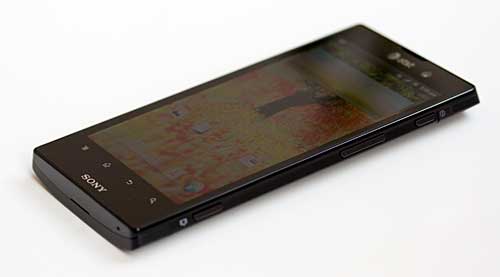
The Sony Xperia Ion is a sweet phone for a great price that's just not getting enough love. For $99 on contract with ATT, you get an award winning design with a sleek glass front and curved metal back, LTE 4G and a 12MP camera. And you thought the $99 Nokia Lumia was a good deal? The Ion tops it for hardware specs. The phone has a 4.6" 720p display with Sony's various marketing names heaped on (Bravia, HD Reality Display) that's simply stunning, and it has HDMI out with an intuitive TV app.


So what's the catch? It runs Android OS 2.3.7 Gingerbread rather than 4.0 Ice Cream Sandwich. That's doubly vexing when Sony recently updated older Xperia models to ICS. As a consolation, they say the Ion will get ICS too. In the meantime, the Sony UI on top of Android is light, and you get a fairly fresh Android experience.


While the latest top dog phones like the HTC One X and Samsung Galaxy S III run on the fourth generation Qualcomm Snapdragon S4 CPU, the Sony Xperia Ion runs on a third gen Snapdragon S3 clocked at 1.5GHz. It has Adreno 220 graphics, and honestly it's no slouch. Human nature and a fear of obsolesce drive us toward the fastest thing we can buy, but the S3 was this spring's top performer and it's still respectable with a Quadrant score of 3100.


Voice quality is excellent: we noted landline clarity on both ends and good volume. Reception is similar to the competition (One X and Samsung Galaxy S III) and data speeds are excellent on AT&T's LTE network.


The star of the show is no doubt the 12 megapixel rear camera with flash. It has a fast f2.4 lens and a Sony Exmor R sensor that can shoot 1080p video and some of the nicest photos we've seen from a phone. Colors are particularly impressive: rich and accurate. We took some light life street shots and were impressed with the camera's low light color and contrast capture. We'll have samples in our full review.


Specs:

4.6", 1280 x 720 LCD (Mobile Bravia)
1.5GHz Qualcomm S3 dual core CPU with Adreno 220 graphics
Micro HDMI and micro USB ports
16 gigs storage
MicroSD card slot
Quad band GSM, triband 3G, LTE 4G
12MP rear camera with Sony Exmor R sensor and f2.4 lens and flash, 16 digital zoom, 1080p video recording, 3D sweep panorama recording
1.3MP front camera
Android OS 2.3.7, upgradable to 4.0 ICS
WiFi, Bluetooth, GPS
NFC
$99 with contract, $449 without contract

Here's our Sony Xperia Ion video review. Our full written review will follow in the coming days

HTC Droid Incredible 4G LTE

Is bigger always better? Not for those of you who simply can't stand carrying today's 
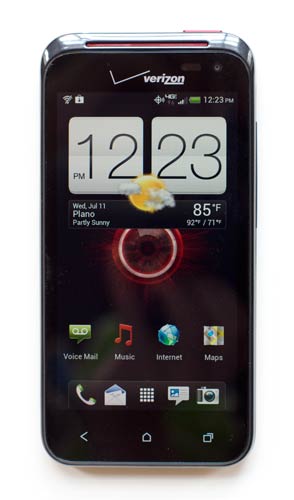
 gargantuan phones. The Droid Incredible 4G LTE is all about livin' small. Downsizing. Less is more. OK, this 4" Android smartphone isn't all that small compared to the now diminutive iPhone 4s. But you will notice that your pocket doesn't have as embarrassing a bulge, and you won't need hand stretching exercises to train for your next phone.


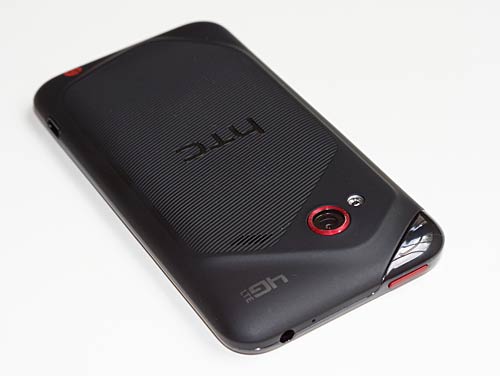
The third generation Droid Incredible by HTC may be smaller than the 4.8" Samsung Galaxy S III and other big boys on Verizon Wireless, but it has plenty of top notch features. A sharp Super LCD display running a qHD resolution, a 1.2GHz dual core Snapdragon S4 Krait CPU and a sharp 8 megapixel camera with BSI sensor and simultaneous 1080p plus still photo recording grace the feature list.


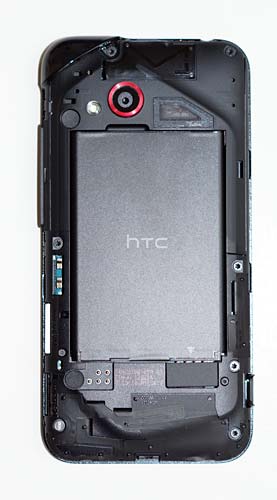
The Droid Incredible 4G LTE runs Android OS 4 Ice Cream Sandwich with HTC Sense software. Unlike the HTC One X, it has a removable back so you can access the 1700 mAh battery and there's a microSD card slot to expand on the 8 gigs of built in storage. There's no dedicated imaging chip here, but the phone is a capable shooter.


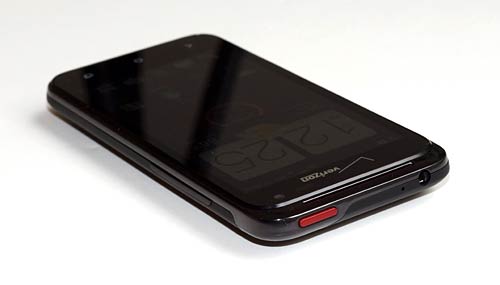
The phone has that distinctive Droid Incredible look with a sculpted waterfall back and red accents (power button, lens ring). The red Beats logo fits right in, and like HTC's other recent Android phones, the Incredible 4G LTE has Beats Audio that enhances audio.


The Droid Incredible 4G LTE sells for $199 with contract, though Verizon's website has a web special for $150. The Incredible's biggest problem on Verizon? The Samsung Galaxy S III that sells for $199 and has every feature except a virtual kitchen sink.

Here's our HTC Droid Incredible 4G LTE video review. Our full written review will follow next week.

Motorola Atrix HD

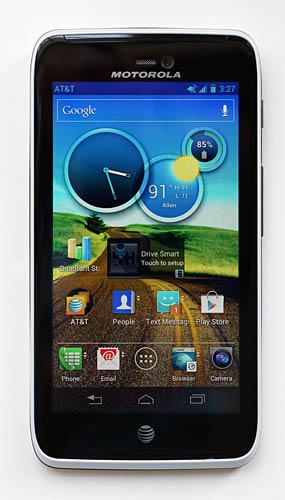
When a seemingly high end phone comes in at $99 on contract, our first thought is "something has to be missing". Yes, AT&T is very aggressive with their contract pricing, but consider the lovely Nokia Lumia 900: awesome phone, but the hardware specs aren't up there with the $199 phones. The $99 Sony Xperia Ion has an elegant metal casing, a stand-out display and a 12MP camera, but it's running Android 2.3 Gingerbread on a third rather than fourth generation CPU. So what's the story with the bargain priced Motorola Atrix HD?

Motorola Atrix HD

Specs
The Atrix HD seems to have it all: Android 4.0 ICS, a lovely 4.5" "ColorBoost" 720p display, the same 1.5GHz fourth gen Qualcomm Snapdragon dual core CPU as the Samsung Galaxy S III and HTC One X, an 8mp rear camera that can shoot 1080p video, dual band WiFi (nice), Bluetooth 4.0 and a GPS. The only thing missing is NFC, but that isn't a huge deal (yet) on AT&T since there's no way to use it for mobile payments.

Design and Ergonomics
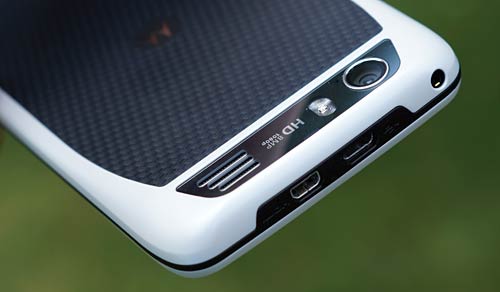
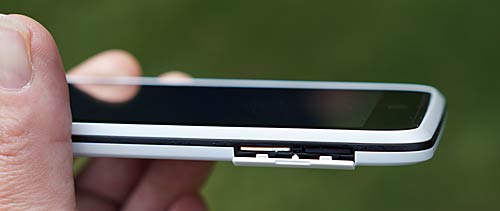
Despite the name, the Motorola Atrix HD is a GSM Motorola Droid RAZR rather than the reincarnation of the last two Atrix Android smartphones on AT&T. It has the beveled Gorilla Glass front and a Kevlar back with the RAZR's distinctive top cap that houses the camera, LED flash, HDMI and USB ports. It's a good looking phone with a sealed casing. That means you can't swap the 1780 mAh Lithium Ion battery since it's sealed inside. There is a microSD card slot on the side though, along with a micro SIM card slot. The Atrix HD's corners are matte and have softer curves than the Droid RAZR, and we confess to prefer the RAZR's edgier design.

Motorola Atrix HD

4.5" smartphones aren't tiny beasts, but the 4.9 ounce Atrix HD is reasonably easy to hold. I find the hand-centric curves of the HTC One X more comfortable, but the Atrix HD is less slippery than the curvy-glossy Samsung Galaxy S III. Despite its slightly smaller screen size, the Atrix HD isn't appreciably smaller than the One X and GS III. 

Motorola Atrix HD

I confess to love the patterned Kevlar back for both looks and texture. The subtly curved Gorilla Glass edges give the phone a more polished look and the black on white stripe on our white model gives visual interest. There's a large speaker grille on the back hump, and this is indeed a loud phone with more fullness than most smartphones offer. The small power and volume controls on the right side are a bit hard to press, but we like having both micro USB and micro HDMI ports (no hunting for MHL adapters). 

Display
The Atrix HD has a 4.5" TFT LCD with ColorBoost (Motorola's marketing term). As the name implies, it has excellent colors that are rich yet not unnatural. The 1280 x 720 display is tack sharp and gets plenty bright. Viewing angles are also wide, though the HTC One X's viewing angles are a bit wider with less glare. Moto's display reminds us of LG's IPS displays, and that's a good thing. As Motorola likes to remind us, since this isn't a Super AMOLED display like the Galaxy S III, there's no Pentile Matrix and resulting smaller number of subpixels. The 326 ppi display is thus sharp with no text jaggies upon close inspection.

Calling and Data
The Motorola Atrix HD has simply excellent call quality. In fact, AT&T's top four Android phones all offer excellent voice (Atrix HD, HTC One X, Samsung Galaxy S III and the Sony Xperia Ion). Incoming and outgoing voice are extremely clear, full and volume is adequate. The speaker is also better than average in terms of volume and fullness, and it reminds us of the original Droid's speaker.

The phone is quad band GSM with 3G and 4G HSPA+ on the 850/1700/1900/2100MHz bands. It has LTE 4G and download speeds averaged 23Mbps while upload speeds averaged 17Mbps in the Dallas area. Those are obviously excellent data speeds that are similar to AT&T's other top LTE Android smartphones.
Reception is solid on 3G and LTE, as we've come to expect from Motorola, and LTE reception is again identical to the top four Androids on AT&T.

Performance and Horsepower
Don't let the budget price fool you: the Atrix HD has the same 1.5GHz Qualcomm Snapdragon S4 "Krait" CPU as the HTC One X and Samsung Galaxy S III on AT&T. That's currently the fastest CPU available on a US Android smartphone, and the Atrix HD indeed feels fast. Motorola's very clean rendition of Android OS 4.0.4 Ice Cream Sandwich no doubt helps speed things along as well. The phone has the usual 1 gig of RAM but only 8 gigs of internal storage (~ 5 gigs available) vs. 16 gigs on the big boys. That's still plenty of room for large app installations, and there's a microSD card slot located on the phone's side so you can further expand storage for media files and documents. Motorola says the Atrix HD is compatible with cards up to 32 gigs capacity.

Benchmarks
Quadrant GLBenchmark 2.1Egypt Offscreen AnTuTu Sunspider JavaScript Test
Motorola Atrix HD 4627 55 fps 6123 1314
HTC One X 5001 56 fps 7074 1617
Samsung Galaxy S III 5102 51 fps 7011 1825
Samsung Galaxy S II Skyrocket 3346 33 fps 5367 2237
Sony Xperia Ion 3126 34 fps 6391 2410

Software: Ice Cream Sandwich
I really like what Motorola has done with Android OS 4.0.4 Ice Cream Sandwich; or more specifically I like what they haven't done. This is the cleanest skin on Android I've seen yet for ICS handsets, and that's a good thing. It doesn't bog down the smartphone or dumb down the UI and try to make it look like Gingerbread so folks won't have to learn a new trick here or there. Motorola's custom square icons are here, but that's pretty much it for significant UI changes. One thing they did add (or rather subtract) is a unique home screen treatment where you start with one main screen and add others, as you desire. You can start with templates or just an additional empty screen. For those who don't clutter their home screens with endless widgets and icons, this is much cleaner and you won't be swiping through unwanted and unnecessary screens.

Motorola's Smart Actions from the Droid series is here, and it offers useful settings customizations based on time of day or locale. You can have it use different sounds and email schedules when at work vs. home, for example. When it's bedtime, it can automatically reduce power consumption by increasing sync intervals.


Camera
Well, it isn't all puppies and roses. The 8 megapixel camera is distinctly average, and this is the one area where the Atrix HD falls short of the One X, GS III and Sony Xperia Ion. It has a bright LED flash and it can shoot 1080p video at 30 fps, but photos lack the sharp detail of the competition. Photos have visible artifacts and both photos and video have oversaturated colors (which some folks may like). It's not a horrid camera; it's just not excellent like the 8MP and higher competition on AT&T.

The Atrix HD has a front 1.3MP camera that worked well for video chat using Skype and Google Talk. Our video partners said we looked clear and bright.

Battery Life
Though I own and use phones with sealed batteries that can't be swapped on the road, I'm not a fan. If you're 9 hours into a business trip and your phone runs out of juice, you're either tethered to an AC outlet instead of getting work done or you're juggling external battery packs that trickle charge the phone. Such is the price we pay for thinner and lighter smartphones.

The Atrix HD, like the RAZR, has a Lithium Ion battery that's sealed inside. We do wish Moto and AT&T had gone with the RAZR MAXX's much more ample battery, but this is a $99 phone. That means a 1780 mAh battery that will get average users through the day with the usual regime of nightly charging. If you're a light user, you'll probably go 2 days on a charge. If you're a streaming video addict, play games with gusto or navigate using the GPS for daily trips, the phone may not make it until bedtime. The same is true of the HTC One X (battery also sealed inside) and the Xperia Ion. The Samsung Galaxy S III's 2100 mAh battery earns 20 to 40 minutes longer runtimes, which isn't much, but it does have a removable battery.

Conclusion
We're really impressed by Motorola's first Android 4 handset for AT&T. It has the stylish good looks of the Droid RAZR with the price tag of a bargain smartphone. The 720p display is very sharp and colorful with good viewing angles and outdoor visibility, and the speaker is above average. Call quality is tops as are data speeds and the phone is fast thanks to ICS and the Qualcomm S4 CPU. The sealed battery isn't ideal for road warriors who need 12 hours of heavy use per day on a charge, but for average use it's adequate (and no worse than the HTC One X). Our only complaint? The camera is decent but doesn't hold up against AT&T's top Android phones. But if high quality imaging isn't your top priority and your budget is tight, the Motorola Atrix HD is a winner. 

Price: $99 with 2 year contract, $449 without contract

Samsung Galaxy S III

The Samsung Galaxy has turned into a yearly event. Why? Because Samsung's flagship Android smartphone is offered by nearly every major carrier and it sells by the millions. It has great features for the price and a decent selection of third party accessories. It's 2012 and the year of the Galaxy S III, a phone with top specs and Samsung's signature thin design and light weight. The 4.7 ounce phone runs Android OS 4.0 Ice Cream Sandwich with Samsung TouchWiz software. In fact, there's a lot more than TouchWiz here: Samsung adds a host of new "S" apps like S Voice and S Beam as well as wireless sharing services for photos and presentations. There's almost too much software here to keep track of, but even if you use just a fraction, you'll probably find something new and useful.
Samsung Galaxy S III
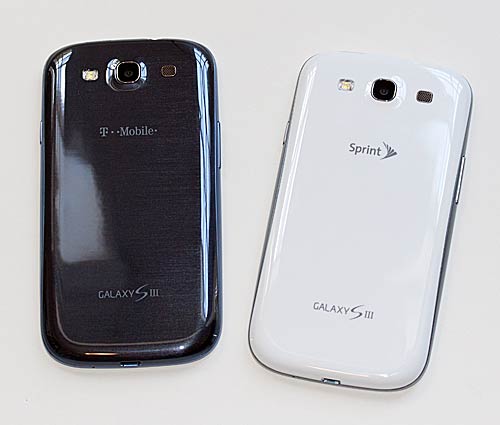
In this review we look at the US model in the form of the Sprint and T-Mobile versions. Sprint, AT&T and T-Mobile launched this phone on June 21 for $199 with contract for the 16 gig model (Verizon's is coming very soon). The hardware is identical except for the cellular radio and the software is the same other than carrier-added apps. 

The Galaxy S III has a 4.8" HD Super AMOLED 720p display and it runs on a 1.5GHz dual core Snapdragon Krait CPU, which is one of the fastest mobile CPUs on the market. It has 2 gigs of RAM rather than the usual 1 gig. Some carriers will offer a 32 gig internal storage version at a higher price. Since the phone has a microSD card slot, you really don't need boatloads of internal storage. 

There's a front 1.9MP video chat camera and a very good rear 8MP camera with flash. The phone has dual band WiFi 802.11b/g/n and Bluetooth 4.0 plus a GPS. So is the Samsung Galaxy S III worth all the hype? Read on to find out.
Samsung Galaxy S III
Design and Ergonomics
While HTC has taken chances and evolved their high end One phones with unibody polycarbonate casings and a new look, Samsung sticks with what works. 

The phone is made of plastic and it has the usual paper thin back cover. Both the Pebble Blue and Marble White models have a high gloss finish that looks attractive even if it doesn't look chic and expensive. The blue model has light blue sides that morph into a darker metallic, striated back. It looks cool but attracts fingerprints like mad. The white model is more organic looking (Samsung was going for curvy, humanistic design with the GS3) and it shows fingerprints much less. Despite the 4.8" display, the Galaxy S III is about the same size as a 4.5" smartphone and it's nearly identical in size to the HTC One X. It's by no means a behemoth like the Samsung Galaxy Note.

Like most Samsung smartphones, the power button is on the upper right side and the volume controls are on the opposite side (making it easy to hit both power and volume at once by accident). Despite that complaint, on a tall phone like the S III, it is easier to reach the power button when it's on the side rather than on the top like most other brands. 

The micro USB port is on the bottom and the headphone jack is up top. The microSD card slot is under the back cover and there's no need to pull the battery to swap cards. GSM models with a SIM card slot have a micro SIM card slot near the removable battery. The GS3 has a notification LED--a rarity on Samsung Android smartphones. If you turn the LED feature on, the light will blink until you've taken care of whatever it's notifying you about.

While the Samsung Galaxy S III falls far behind the HTC One X and One S in terms of materials and aesthetics, it is a solidly built phone that's decently attractive. 

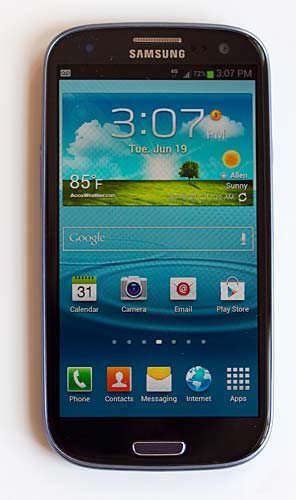
And for those of you who love the hardware home button (the kind that moves and clicks) that Samsung offers on many overseas models, it's alive and well here. Two capacitive buttons flank it for Menu and Back, similar to Gingerbread phone models. Rather than a dedicated ICS multi-tasking button, you'll press and hold the home button to see a list of recently run applications. Double-tap the home button to launch S Voice (voice command).


Display

The 4.8" HD Super AMOLED display would've been really exciting a year or two ago, but these days IPS and advanced LCDs offer sharper text, wider viewing angles and better outdoor visibility. We'd love to see Samsung move away from Super AMOLED displays in their most expensive phones; they once were a competitive advantage but now hobble the phone. 

The 1280 x 720 display has a Pentile Matrix that uses fewer subpixels than LCDs, and the result is slightly reduced sharpness. Still, there are a lot of pixels here thanks to the high resolution, and we suspect many Super AMOLED fans will enjoy the display. Super AMOLED displays have better than life colors, though the colors are more in control here and less cartoony, and black levels are phenomenal. 

White levels are Super AMOLED's weak spot and whites aren't quite as bright as LCDs and they still have a slight blue tint, despite the GS3's improved color balance. The display's colors pop, but the screen isn't hugely bright. Note that Samsung has a power saving feature that automatically dims whites to save power and we suggest turning this off to avoid dingy whites (the power drain is negligible). 

Samsung's auto-brightness as ever tends to be too dark, so we had to go with manual brightness to suit our eyes. I don't mind manual brightness but that means having to adjust it when outdoors under sunlight because the display is hard to see at 50% brightness (my preferred indoor brightness setting).

Phone and Data

The Samsung Galaxy S III has superb voice quality on both Sprint and T-Mobile. Samsung really knows how to make an excellent voice phone. Incoming and outgoing voice are loud and very clear with no background noise or digital distortion. Just in case call quality isn't already stellar enough for you, there's a volume boost setting for noisy environments and EQ settings-- yes EQ isn't just for music players anymore.
On both the T-Mobile and Sprint versions our data connection sometimes dropped for a second every so often. That makes me think there's a firmware issue since it occurs on two different carriers, and I'd assume Samsung could fix this with an update if it proves to be a problem for others.

The T-Mobile version has 42Mbps HSPA+, and that provides excellent data speeds that didn't make me pine for LTE. Our phone averaged 11Mbps down and 1.5Mbps up. The Sprint version has 3G EV-DO Rev A and 4G LTE, but Sprint's LTE network isn't yet live, so we had to use their sluggish 3G network that averaged 400k down and 350k up in our area of the Dallas metroplex. Sprint's version has a feature that will automatically turn WiFi on if the phone is in range of a known WiFi network and that certainly helps. AT&T and Verizon versions have both 3G and LTE, and both carriers have robust LTE networks with fast data speeds. All carrier versions have the mobile hotspot feature that turns your phone into a high speed wireless modem for laptops, tablets and other devices (this may require an additional monthly charge).

Performance and Battery Life

All US carriers are going with the 1.5GHZ dual core Snapdragon S4 CPU (because it's compatible with LTE) rather than Samsung's latest Exynos CPU. That's not a bad thing since the Snapdragon S4 is a top performer that holds its own against the Exynos and quad core Tegra 3. It manages strong battery life as well, and the Galaxy S III on T-Mobile and Sprint (neither running on LTE) had no trouble making it through a full day on a charge with moderate use. When we get our hands on the LTE Verizon and AT&T models, we'll update this review with info on their battery life.

The Galaxy S III benchmarks similarly to other 1.5GHz Qualcomm S4 smartphones like the HTC One X. It falls just a few points behind the One X, and it feels responsive despite the demands of TouchWiz 4. Is it one of the fastest Android phones currently on the market? Yes it is. Does it feel faster than the iPhone 4S? Not so much, but that's an Android vs. iOS issue. 

The phone has Adreno 225 graphics, and that's a capable graphics processor that can handle the latest 3D titles well. We tested a variety of games that worked perfectly, though Max Payne didn't draw on screen controls on the GS III, making it impossible to play. That seems to be a compatibility issue with some Samsung models and the developer is working on that issue.
Benchmarks
  Quadrant GLBenchmark 2.1Egypt Offscreen AnTuTu Sunspider JavaScript Test
Samsung Galaxy S III 5009 53 fps 6826 2027
HTC One X 5001 56 fps 7074 1617
HTC One S 5102 51 fps 7011 1825
Samsung Galaxy S II Skyrocket 3346 33 fps 5367 2237
Samsung Galaxy Nexus 2753 N/A 5985 2175

*Note that the Sprint and T-Mobile versions benchmarked identically with a less than 15 point difference in Quadrant and AnTuTu.

Software

The smartphone runs Android OS 4.0, the latest and greatest version of that OS. It has Samsung TouchWiz 4, and if you're a Samsung owner, the UI will look very familiar to you. In fact, it really doesn't resemble vanilla Android at all, and Samsung goes farther than HTC's Sense to skin Android (watch our video review to see TouchWiz in detail). You get Samsung's usual custom app icons, their widgets for various Samsung apps and services like Media Hub, S Memo, S Calendar (it now skins Calendar instead of being a separate app) and Samsung's music and video players as well as a host of new widgets. There are many, many screens of widgets to choose from out of the box. 

 Samsung's own app store is on board, as is their Buddy Photo Share feature, AllShare Play DLNA streaming, a wireless group PowerPoint presentation feature, and a proprietary Galaxy S III to Galaxy S III hybridization of Android Beam NFC and WiFi Direct called S Beam. Honestly, there's more software here than most of us can wrap our heads around. Samsung's software push is perhaps excessive: some of the apps and features feel more like buried gee-whiz gimmicks than stuff that's easy to use and necessary. That said, you can explore what you wish and ignore the rest.

The most talked about feature is Samsung's S Voice. It's Vlingo on steroids and it tries to fight Siri on the iPhone but loses. Where Siri does a pretty good job of hearing and understanding us, S Voice seems like my partially deaf grandma from the old country whose English is a little quirky. It helps if you talk quite loudly at the phone when issuing commands, and forget using it in noisy environments. Like Siri, it sends your commands to a server using the data connection and the server interprets those commands and tells the phone what to do.

 If your data / WiFi connection is slow or down, you'll get "sorry, network connection error" messages. Check out our video review to see S Voice in action. It is useful for most common tasks like checking the weather or your next appointment, but it doesn't do well with those fanciful natural language queries that Siri handles so well like "what's the meaning of life?" 

You can set the phone to always listen for your command (prefaced with something like "hi Galaxy"), and that can impact battery life. Alternatively, you can set it to run whenever you double-press on the home button, which doesn't affect battery life.

One of our favorite features is how the phone will automatically call the person you're currently texting if you put the phone to your head when viewing that conversation. And we really like the Smart Stay feature that uses the front camera to see if you're looking at the phone's screen and prevents it from turning off while you're looking at it (but why isn't this feature turned on by default?). Less useful but cool if you want to impress your friends is the PIP (picture in a picture) feature where you can play a video in the Samsung video player and tap a button to keep that video running in a small window while you're in other apps.

Camera

Like the Galaxy S II, the S III has an 8 megapixel camera that can shoot 1080p video, but quality has improved over the S II. We still noted some exposure issues in bright outdoor shots where the camera rendered hazy images, but the new HDR feature helps greatly with that. Dedicated image processing chips are the next big thing in high end phones (the HTC One X has one too), and that allows for extremely quick shot times. Again, like the HTC One X and One S, you can shoot photos while simultaneously recording video but there's no slow motion option like that of the One X. There are plenty of effects to play with: exposure, macro mode, face detection, smile detection and panorama. This is a very capable camera, though we give the edge to the HTC One X for image quality.

Video quality is excellent at 1080p and 30fps: video is sharp and colorful with smooth motion and little in the way of blockiness. The continuous autofocus sometimes hunts when several subjects are in motion at once, but overall it's great stuff.

For those of you who can't be social enough, there's Share Shot: a feature where you and your GS III-toting buddies can share photos in real time over a WiFi Direct connection. Speaking of social, Buddy Photo Share will implore you to tag faces and assign photos to your social networking friends. This was a hit or miss feature and it sometimes didn't recognize nearly identical shots of the same person, and it thought a houseplant was my best friend.

Conclusion

Is the Samsung Galaxy S III an excellent smartphone? Yes it is. Given the millions of preorders, I suspect many of you would buy this no matter what I said about the phone. That speaks of Samsung's momentum in the smartphone market and their excellent track record. Is this Samsung's best Android phone ever? Yes it is, but there is room for improvement.

 I'd love to see Samsung use high quality materials and cutting edge designs in their top tier phone. I wish they'd cut down on the absurd number of features and apps introduced with the GS III, and instead focused on making a few core apps really solid. S Voice is a fantastic feature that needs more development (it's hard of hearing, prone to network connection errors and needs more natural language AI to compete with Siri). 

With more work, it could really sell folks on the Galaxy S III. If Samsung axed the Group Cast PowerPoint presentation sharing over WiFi feature to spend more time on S Voice and facial recognition in photos, the smartphone world would be a better place. Software and cosmetic gripes aside, the Samsung Galaxy S III has phenomenal voice quality, a fast CPU and good battery life for a powerful phone. If you buy one, you probably won't be disappointed.
Price: Starting at $199 for 16 gig model with contract

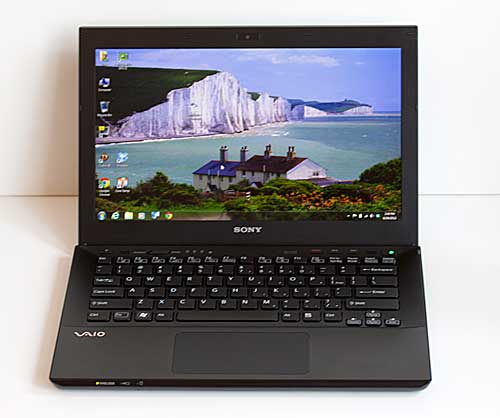
Sony Vaio S 13.3,Sony's on a roll with their 2012 Ivy Bridge notebooks.

Sony's on a roll with their 2012 Ivy Bridge notebooks. The Vaio S series has always been a class leader among a small group of powerful ultraportables with dedicated graphics. 

 In fact, it harkens back to the older Vaio Z and SZ lines that put a premium on both portability and upgradability. Now the S Series has split into two lines: the Vaio S 13.3 and the Vaio S 15.5. The 15.5" model is new and replaces the Vaio F Series. The S 13.3" carries on the sub- 4 pound powerhouse tradition, and in this review we look at the Sony Vaio S 13.3 Premium, otherwise known as model SVS13A190X, or simply Vaio S13A. The S13A is close to the size and weight of Sony's first Ultrabook, the Vaio T! The S is priced similarly to the T, making the S a better deal overall.
Sony Vaio S 13.3
The premium model starts at $1,119 and you get plenty for your money:
- Full mobile Intel Core i5 and i7 CPUs (dual core, third gen)
- Switchable graphics with Intel HD 4000 graphics and 1GB DDR3 Nvidia GT640M LE (Kepler) dedicated graphics
- 1600 x 900 matte display
- Carbon fiber casing (available in black, gold and gunmetal)
- Internal DVD burner (Blu-ray is optional)
- Fingerprint scanner with TPM
- 7200 RPM hard drive (SSD is optional)
- 4 to 12 gigs of DDR3 1333MHz RAM
- Backlit keyboard
- 2 USB 3.0 ports, 1 USB 2.0 port, HDMI, VGA, Gigabit Ethernet and 3.5mm audio
- Intel WiFi 802.11n with Intel WiDi and Bluetooth 4.0 + HS

Other Vaio S 13" Models

The standard Vaio S13 weighs 3.8 pounds and is 0.95" thick. The premium, thanks to carbon fiber, weighs 3.69 pounds and is 0.90". The standard model starts at $799 with integrated graphics and the $999 enhanced model has switchable dedicated graphics. Both standard and enhanced have 1366 x 768 displays. Our premium rocks a good quality 1600 x 900 matte display with decent blacks and above average color saturation. It's not as good as the superb 1920 x 1080 panel used on the Sony Vaio Z, but that machine costs a good deal more.

In this review we cover the $1,199 premium model with 6 gigs of RAM and a 640 gig 7200 RPM hard drive. The laptop has a 4,400 mAh Lithium Ion battery and there's an optional sheet battery that doubles runtimes. If you remove the notebook's bottom cover (affixed with two small Phillips head screws) you can access the battery, single RAM slot and hard drive. The notebook has 4 gigs of RAM soldered on the motherboard and one standard SODIMM RAM slot (ours shipped with a 2 gig module but I upgraded it to an 8 gig module for a total of 12 gigs).

Is the Vaio S13A just a poor man's Vaio Z? For some it might be, but I see it as a more all-around machine for those who need an optical drive and internal dedicated graphics and can live with 3.7 vs. 2.5 pounds on the road.
Sony Vaio S 13.3
Carbon fiber goodness: the Sony Vaio Z and Sony Vaio S 13.3 Premium.

Deals and Shopping:


Sony Vaio S 13.3 Gaming Demo

In the video below we test Skyrim, Diablo III, May Payne 3 and Civ V on the Sony Vaio S 13.3 Premium with the Nvidia GT640M LE. We tested all the games at native 1600 x 900 resolution, and often used fairly aggressive quality settings (we show you the settings used for each game in the video). Results were suprisingly good with very playable frame rates (shown on screen courtesy of FRAPS). The Vaio has the 2.5GHz Core i5 and it's clearly good enough to play today's demanding 3D games.

Design and Ergonomics

The Vaio S, Vaio T and Vaio Z use Sony's "full flat" design. That's not a very compelling moniker from a marketing perspective, but it does aptly describe the thin and flat chassis design. There's no Apple taper and Sony goes with an angular look rather than gentle curves. The Vaio S is attractive and looks like a quality piece. The mirrored angular hinge is a unique design touch with practical applications: it blocks the rear vents less than standard lid designs and allows for a cleaner appearance from the sides. The angled edges look cool and make the notebook easier to grip. The usual large Vaio logo graces the lid in silver on standard models and it's gold on the premium model.

The premium model has a carbon fiber casing like the Vaio Z and other high end Sony notebooks of the past. Carbon fiber isn't just designer frou frou: it's lighter, thinner and strong. That's how Sony achieves the thickness and weight reduction, and it looks good too. The standard Vaio S 13.3 has a magnesium alloy casing that's also strong but in terms of aesthetics, it somehow looks and feels like plastic (likely because the painted alloy is so thin and light). I prefer the carbon fiber look, but functionally, both the magnesium and carbon fiber models are good stuff. The display panel exhibits Sony's usual flex, which they say is intentional so the display bends without snapping. I've been using Sony notebooks for years with these thin and flexible display panels and have never had a problem with them.
All ports are on the right, so there's no need to hunt for that USB or HDMI port. The notebook (regardless of variant) has 2 USB 3.0 ports, 1 USB 2.0 port, HDMI, gigabit Ethernet, VGA and a 3.5mm audio jack. That's a good set of ports for a machine this small, and the only thing we long for is a DisplayPort to drive very large, high resolution displays that exceed the HDMI port's 1920 x 1200 max resolution. The Vaio S has both SD and Memory Stick Duo slots as well.

Display and Sound

The 1600 x 900 matte display is head and shoulders above today's gloss displays for clarity thanks to the lack of reflections. It has rich colors despite the matte finish and slightly better than average color gamut (compared to the notebook average). Why is a matte display a premium feature on notebooks? Because manufacturers can use cheaper, less capable panels that rely on the gloss finish to increase apparent contrast, black levels and color depth.

Viewing angles are again a bit better than most notebooks with TN panels, and that means the sweet spot for best viewing isn't as hard to find compared to other laptops with TN panels (most notebooks use TN panels, inlcuding Vaio S 13.3 models). Viewing angles aren't nearly as good as IPS displays by any means. Is the premium display as good as the Sony Vaio Z's 1920 x 1080 display? No. You do get what you pay for. The Z has an unusually wide color gamut, and colors and highlights really pop compared to the S premium. In terms of sharpness, the Vaio S13A has high pixel density so text and images look very sharp. The Vaio S 13.3 premium has a good display, but we'd love to see an even better one to compete with Apple's non-Retina notebooks and the Asus Zenbook Prime UX31A Ultrabook. After all, it is a premium notebook.

The machine has Intel WiDi wireless display courtesy of Intel HD 4000 graphics and the Intel Advanced-N 6235 single band WiFi card. That means you can output a movie and anything else you wish to your TV wirelessly if you have a WiDi wireless receiver like the Netgear Push2TV attached to your home theater system via HDMI.

Sony's stereo speakers are by no means impressive. It never ceases to amaze us that a company that's known for excellent consumer and pro audio gear can ship such tinny notebook speakers. Despite help from both Dolby Mobile Home Theater v4 software and Sony's own xLoud/Clear Phase audio enhancements, the speakers aren't very loud and they have no bass. You can choose between Sony and Dolby audio, and Dolby is much louder and a bit more full. Connect headphones or stereo speakers and you'll hear a world of difference: lush sound with good bass and plenty of volume. The audio circuitry and software are good stuff; it's the speakers that hold the system back.

Keyboard and Trackpad

We're quite fond of Sony's roomy chiclet keyboards: they have plenty of key spacing and the keys are relatively large. The Vaio S has good key travel (much more than the 0.66" thin Vaio Z or the Vaio T Ultrabook) and good tactile feel. The keyboard doesn't offer the Lenovo ThinkPad's dreamy tactile feedback, but somehow I type just as fast on the Sony as on the Lenovo ThinkPad X230 12.5" notebook. The premium model has a white backlit keyboard and the light shines out from the keys' edges. When plugged in, the backlight stays on all the time in dim environments. When unplugged, the backlight turns on when you press a key, and it turns off after a short period to save power (you can set the interval but it's fairly conservative).

The Vaio has Sony's usual dedicated shortcut keys above the keyboard for Vaio Care, web browser and the application of your choice. There's a dedicated CD eject button at the upper left corner, and caps lock indicators to the right. The charging, wireless and HDD LEDs live on the front edge. The power button is at the right corner and it illuminates in green when the machine is turned on.

The Synaptics buttonless touchpad is huge for a 13" notebook. It supports multi-touch gestures and it's more reliable than most other brands of Windows notebooks. The surface is ever so slightly rougher than the keyboard deck so you can tell if you've wandered off the trackpad. Though it lacks buttons, it clicks when you press the trackpad, and you can use the usual left and right click functions.

Horsepower and Performance

Here's the thing: Ultrabooks are all the rage right now, and there's a lot to like about them: they're super light, slim, have quality casings and reasonable processing power. But Sony was in the business of making ultraportable computers long before the netbook and Ultrabook crazes hit the market. They make machines with standard laptop computer processing power that fit in a near-Ultrabook size case. And the Vaio S (standard or premium) offers full mobile third generation Intel Core i5 and i7 dual core CPUs that run circles around the ULV (ultra low voltage) CPUs used in Ultrabooks. Do you need all that processing power? If you just use MS Office, email, web, occasionally edit photos, play music and watch video then you don't. But if you often use heavyweight apps like Adobe Creative Suite, edit 1080p video frequently and play today's demanding 3D games then you do need a full mobile CPU and likely a dedicated GPU for 3D gaming.

The base Sony Vaio 13.3 ships with 5400 RPM drives and the premium model ships with 7200 RPM hard drives. If you built to order on Sony's website, you can get SSD drives in 128, 256 and 512 gig capacities. 

These are the same RAID 0 drives used in the Sony Vaio Z, but they use a standard SATA II/III connector. Since you can easily access the hard drive bay, that means you can upgrade to an SSD drive later to save money if you wish. Sony achieves extremely high data transfer speeds with their RAID 0 SSDs though, that surpass even the fastest aftermarket SSD drives like the Samsung PM830. SSD drives improve speed immensely when launching apps and booting Windows, though the Vaio S with a conventional HDD boots faster than average and wakes from sleep in just 2 seconds thanks to Rapid Wake technology.

The notebook has 4 gigs of DDR3 RAM soldered to the motherboard and one standard SODIMM RAM slot that accepts modules up to 8 gigs (the largest currently available in notebook SODIMM size). The machine uses 1.35 and 1.5v 1333MHz RAM. I installed a 1.5v 8 gig Corsair ValueSelect DIMM and it works perfectly.

Benchmarks

Synthetic benchmarks like PCMark Vantage give lots of points to fast SSD drives, and that's why the Vaio S 13.3 (and other powerful and larger notebooks) score lower on synthetic benchmarks than slower Ultrabooks with SSD drives.
3D Mark Vantage: 5611 (GPU 5032, CPU 8565) on Performance test preset
PCMark Vantage: 7575
Memories: 5014
TV and Movies: 3625
Gaming: 5957
Music: 6594
Communications: 9633
Productivity: 6321
HDD: 4219

Windows Experience Index:
Processor: 7.1
RAM: 7.4
Graphics (for Aero): 5.9
Gaming Graphics: 6.8
HDD: 5.9


Benchmark Comparison Table
   Sony Vaio S 13.3 Core i5, NVidia GT640M LE Sony Vaio Z 2012 Core i7 Lenovo ThinkPad X230 Core i5 Sony Vaio T Core i7 ULV Ultrabook MacBook Pro with RetinaCore i5, NVidia GT650M
PCMark Vantage 7575 17,003 8152 12,120 19,174
3DMark Vantage 5611 4,003 3209 3,078 10,656

Intel HD 4000 Graphics and NVidia GT640M LE Dedicated Graphics

All but the base $799 Vaio S13.3 offer switchable graphics with the new Intel HD 4000 integrated graphics processor and NVidia GeForce GT640M LE graphics with 1 gig of DDR3 VRAM. The HD 4000 is by far Intel's most capable integrated graphics chipset yet, and the NVidia GPU is built on a 28nm architecture with 3 to 4x the performance per watt of the outgoing 40nm Fermi architecture.

Dedicated graphics are extremely scarce in 13.3" Ultrabooks and they allow for things like faster video editing, faster Photoshop work and 3D gaming at solid frame rates. Our Vaio S13A with the base 2.5GHz Intel Core i5- 3210M with Turbo Boost to 3.1 GHz running on dedicated graphics had no trouble playing Diablo III, Skyrim and Max Payne 3 at native 1600 x 900 resolution with quality set to medium. Diablo 3 played at 45-70 fps depending on the screen, and Max Payne 3 (medium settings) ranged from 45 to 60 fps. 

That's very impressive gaming performance that we'd expect to see on a 15"+ laptop rather than a lightweight 13.3" model with an upper mid-range mobile GPU. Nice. The 2.9GHz dual core i7-3520M would boost frame rates a bit, but we found it wasn't necessary with today's demanding 3D titles. Sony currently does not offer a quad core i7 option on the S 13.3.

Sony has employed a hardware "Speed/Stamina" switch for graphics switching for years and we love it. It's much more reliable than software switching used by AMD for Radeon graphics cards and even NVidia Optimus switching. There's no need to reboot when switching modes and it's extremely quick. One thing to note: even when on the Speed setting, the notebook will sometimes drop down to Intel HD 4000 graphics when the machine is set to the default Balanced setting in Sony power management. This is particularly annoying when you're in the middle of a battle in a game! Use the Vaio Control Center to set the fan to "Priority to ventilation" for the Speed setting and the problem goes away. Happily, the fan doesn't get much more aggressive on the Priority to ventilation setting.

Heat and Fan Noise

When fast components are jammed into a small chassis, heat can be an issue, but NVidia's new 28nm Kepler architecture generates noticeably less heat. The same is true of Intel's third generation 22nm Ivy Bridge CPUs: they run a bit faster and are cooler chips. Surprisingly, we noted that the Intel HD 4000 GPU doesn't run cooler than the chilly GT640M LE. Unlike aluminum, carbon fiber and even magnesium alloy don't transfer heat as directly to your skin, so the laptop never feels unbearably hot, even when gaming. Our machine's bottom stayed at a tolerable 93-99F except at the rear exhaust vent that reached 103F when playing games like Max Payne 3. The keyboard area doesn't get hot, and the far right wrist rest area gets warm (the hard drive is under there).

Fan noise is greatly improved in both the Vaio S and Vaio Z. Fan noise is even and not whining or grating. It's fairly quiet when doing productivity tasks. When playing 3D games (with either integrated or dedicated GPU) and exporting 1080p video, the fan cycles on and off and is certainly audible but it doesn't roar. When we set Sony's power management to priority cooling under speed (dedicated graphics) mode, the fan stays on more of the time but still doesn't get crazy loud. In fact, it's often a little quieter since it keeps the machine running cooler.

Software

The Vaio S 13.3 is available with Windows 7 Home for the base price and you can get Windows 7 Professional for an additional charge. We particularly like the Sony premium video and sound editing titles included. You get the usual Office 2010 Starter Edition, a 30 day trial of Kaspersky Anti-Virus 2012, webcam software (including software that does PlayStation Move-like motion control for a few apps), Cyberlink Power DVD, Sony Vegas Platinum 11 (capable video editing software) and Sound Forge Audio Studio. There's a utility that lets you use the Vaio's keyboard with your PS3 and the less useful but large Play Memories Home. And there's Sony's redundant VaioGate app launcher that runs across the top of your desktop (fortunately it's easy to kill).

Battery Life

The machine has a 4,400 mAh Lithium Ion battery that lives under the bottom door. This isn't a quick swap battery that you release with a latch; rather you have to remove two screws that secure the door to access the battery. Sony sells an optional $150 4,400 Lithium Ion polymer sheet battery that attaches to the notebook's base to double runtimes.

Sony claims 7 hour runtimes, and that's obviously using integrated graphics with the display set at 50% or less. In our real world productivity tests with the brightness set to an adequate 40% and both WiFi and Bluetooth on, we averaged 6.3 hours on a charge. When playing video, the machine averaged 5.9 hours. Expect dedicated graphics to drop those runtimes by 1.5 hours or more. That's pretty darned good given the size and power of this notebook, but it's not one of the longest lasting notebooks on the market.

Conclusion

If you're looking for that narrow intersection of performance and portability, the Sony Vaio S 13.3 is hard to beat. You get the creature comforts of a big notebook (optical drive, dedicated graphics, full mobile CPUs) in a not much heavier or thicker than Ultrabook package. This laptop can do the jobs of both a capable 15" notebook and an Ultrabook. The 1600 x 900 matte display is a pleasure for long work sessions and photo editing thanks to the matte finish, and the excellent backlit keyboard is perfect for those who type lots. 

The Vaio S is extremely stylish with excellent build quality and it will likely be appealing to those of you who find the also powerful 12.5" Lenovo ThinkPad X230 too thick or dull. It also beats the X230 on resolution, though not on display quality (Lenovo's IPS display is sweet). And for you style/quality mavens who are also considering the 13" MacBook Pro, keep in mind that the Sony offers a higher resolution matte display and dedicated graphics, which the 13" Mac lacks.
Price: $1,199 as tested. Standard starts at $799, Enhanced at $999 and Premium at $1,119
Web Site: www.sony.com
 
Support : Creating Website | Johny Template | Mas Template
Copyright © 2011. GADGET ONLINE - All Rights Reserved
Template Created by Creating Website Published by Mas Template
Proudly powered by Blogger