Headlines News :
Tampilkan postingan dengan label Feature. Tampilkan semua postingan

Nokia Lumia 820 reviews

Nokia Lumia 820
The Lumia 820 is the midrange version of Nokia's top-notch Windows Phone 8 handset, with wireless charging, Amoled screen, changeable covers and eight-megapixel camera.
It's on sale now for around £380.

Design
Looking very similar to the high-end Lumia 920, the 820 drops a few features along with the price, but still delivers full-fat Windows Phone 8 while still leaving room for some change in your pocket.
Like its cousin it's chunky and heavy (though a smidgeon lighter and thinner) but this one is available with changeable covers in different colours to suit your mood -- there's also a rugged version planned. You don't get any spare cases as standard, though, so you'll need to shell out extra for them. Like the 920, the standard case permits wireless charging, though you'll need to buy Nokia's charging plate to rest it on.

Removable case also means removable battery, as it happens, and underneath you'll find a slot for your SIM card, and for the first time we've seen on a Windows phone, a microSD card slot so you can bump up the 8GB of onboard memory by up to 64GB.

The screen isn't quite up there with the 920's HD display but it's a 4.5-inch AMOLED with a resolution of 800x480 pixels -- not super-sharp perhaps, but perfectly capable of giving a good account of web pages or viewing movies, even if they're not HD. It's very sensitive too, and like the 920 you can use it even when you're wearing gloves.

Performance
It's running a dual-core 1.5GHz Snapdragon processor -- much the same as on its pricier cousin -- and it seems equally fast in use. And in case you were wondering, that's very fast.

Windows Phone 8 isn't a root-and-branch redesign of the operating system, but it offers quite a few behind-the-scenes tweaks and fixes, as well as some new features like resizable tiles for the Start screen and useful apps like Kids Corner, which allows your offspring to play with your phone without wiping any data or sending embarrassing emails. You can find out more about the new features in Windows Phone 8 in our more in-depth Lumia 920 review.

The eight-megapixel camera is just a little bit below the 920's 8.7 megapixels and includes a Carl Zeiss Tessar lens, autofocus and a dual LED flash and f/2.2 aperture. WP8 now gives you the option to download additional "lenses" -- apps that enhance your camera. It's early days but the selection includes Smart Shoot (editing), Cinemagraph (animate sections of your pics) and Panorama, as well as CNN, which allows you to submit your pics for inclusion on the news channel. Picture quality is pretty good overall, certainly better than you'll get from the eight-megapixel camera on HTC's Windows Phone 8X.

Microsoft Office is on board, though not quite as full featured as the version on the 920. However, the selection of Nokia apps goes a long way to make up for it, with free music via Nokia Music, plus free maps and satnav from Nokia Maps and Nokia Drive.

The 1,650mAh battery doesn't quite match the 920's 2,000mAh but at least it managed to last through a full day of fairly heavy use.

Conclusion
It doesn't have all the big-number specs, but the Lumia 820 offers an affordable way to get to know Windows Phone 8 as well as a lot of free extras, including Nokia's impressive music and satnav offerings. Want something even better? The Nokia Lumia 920 might be for you.

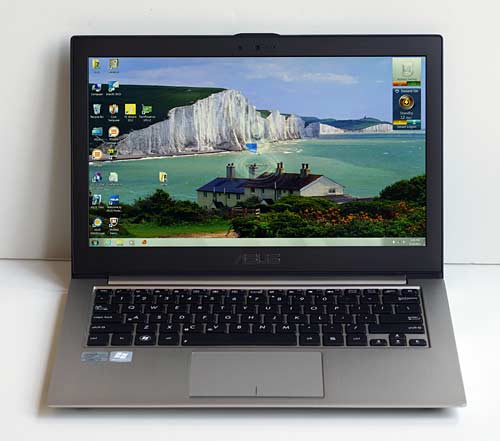
Asus Zenbook Prime UX32VD


Asus Zenbook Prime UX32VD
Asus could have stopped when they made one of the best Ultrabooks on the market (twice). Last year's Zenbook UX31E was one of the best Ultrabooks on the market, despite its flaws. This summer's Zenbook Prime UX31A is once again one of our top picks, and it addressed the UX31E's flaws (keyboard, good but not stellar display). As if the 1080p IPS display on the Zenbook Prime UX31A didn't push the envelope enough, Asus has let loose the Zenbook Prime UX32VD, a near dead ringer for the UX31A but with added goodies: dedicated graphics and upgradable RAM and hard drive. Nice.

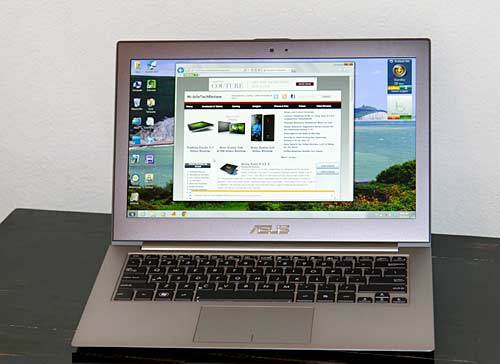
Like the UX31A, the Zenbook Prime UX32VD has an impressive 1920 x 1080 IPS display, a backlit keyboard, third generation ULV CPUs and a killer unibody aluminum design. Given the extra space required for upgradable parts and dedicated graphics, the UX32VD is a tiny bit thicker and a little heavier (3.2 pounds vs. 2.86), but it shares the same design, materials and attractive look as the UX31A as well as its 13.3" display size. In fact, so much is the same that this review will share some copy with our UX31A review.

Specs
The Asus Zenbook Prime UX32VD (who picked those final letters?) is an Ultrabook with a 13.3", 1920 x 1080 IPS display, 1.7GHz Intel Core i5 and i7 ULV CPUs (the 1.9GHz i7 is more prevalent and the i5 is more often found in the non-1080p UX32A), a 500 gig conventional hard drive with a small SSD that acts as an Intel Express Cache to speed boot and resume times, 4 gigs of DDR3 RAM and both Intel HD 4000 and Nvidia GeForce GT620M dedicated graphics. Not too shabby for $1,299. The laptop has a unibody aluminum casing that looks every bit as modern, classy and sleek as Asus' more conventional Ultrabooks. 

It has dual band Intel WiFi 802.11b/g/n with WiDi, Bluetooth and a 720p webcam. Notably absent is an optical drive, which you won't find on 13" Ultrabooks. The machine has three USB 3.0 ports (two on the right, one on the left), an HDMI port, mini VGA, a 3.5mm jack and an SD card slot. Asus provides a USB 10/100 Ethernet dongle and a VGA adapter.

Asus Zenbook Prime UX32VD

Other Zenbook Prime Models
- The first generation Zenbook UX31E had a lower resolution, non-IPS display and Intel Sandy Bridge CPUs. It looks nearly identical to the UX31A.

- The Zenbook Prime UX31A is available with a 1.7GHz Intel Core i5 CPU (UX31A-DB51) or with a 1.9GHz Intel Core i7 CPU and a 256 gig SSD (UX31A-DB72). A classic Ultrabook by Intel's definition with SSD storage, Intel ULV CPUs and an extremely thin and light design.

- There are custom Best Buy and Amazon models as well. The Best Buy model is the same as the DB51 minus the 1 year accidental damage warranty. The Amazon AB71 has the Core i7 CPU and a 128 gig SSD.

- The Asus Zenbook Prime UX32VD has dedicated Nvidia GT620M graphics (a lower end dedicated GPU) and both the RAM and hard drive are upgradable. The UX32VD ships with a conventional spinning 500 gig hard drive and a small SSD drive that boosts boot and resume times. 

- Lastly, the Zenbook UX32A (no "Prime" in the name) is a low spec model with a 1.4GHz Core i3 ULV CPU, 320 gig conventional hard disk and a lower resolution display (not a good pick).

* The word Prime= 1080p display, an SSD drive and a backlit keyboard. 

Design and Ergonomics
The 3.2 pound UX32VD Zenbook Prime looks almost identical to the Zenbook Prime UX31A, and that's a good thing since that machine is simply stunning looking and well made. The casing is metal and rigid, though the keyboard deck is softer and we noted some trampolining in the center that will drive serious typists a little mad. The lid and bottom panel as well as the keyboard deck are very firm in contrast. The UX32VD is just a little thicker than the 0.67" UX31A, but it's still very slim at 0.7".

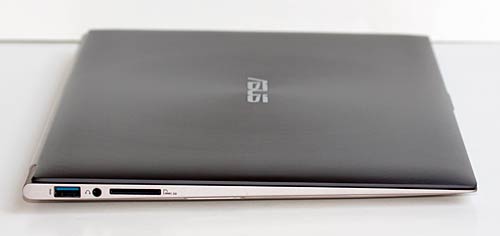
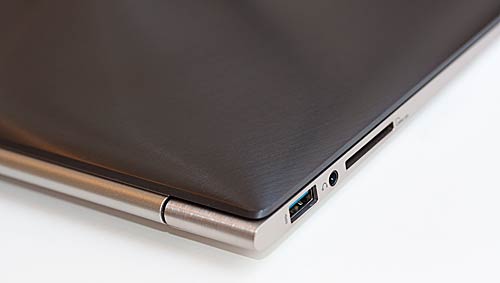
The combo of a dark metal swirl lid and a brushed stainless steel hinge barrel and bottom look great. The laptop looks and feels like a high quality piece of tech that holds its own against the MacBook Air. Like the Air, it tapers and is 5.5 mm thin at the front and 9mm at the rear. Looks are subjective, but I think the Zenbook Primes are some of the most attractive Ultrabooks on the market. The metal edges are well machined so there's no roughness or sharpness, but the front tapers to a fine point that might bother some folks' wrists.

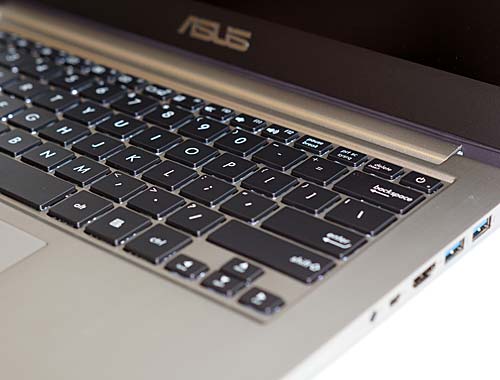
The keyboard is much improved from Asus' first generation Ultrabooks, the UX31E and UX21E. The Chiclet style backlit keyboard has good tactile feel and travel by skinny Ultrabook standards. My only complaint is the mushy give in the center and right-of-center keyboard area. It's not a deal breaker, but it's not as good as the UX31A keyboard. 

The Elan trackpad is the same as that of the UX31A, and it's much, much better than the UX31E trackpad. However, Asus' drivers are the weakest part of the equation and I found the trackpad behaved better once I removed Asus' trackpad software and stuck with Elan's. Asus has issued a few driver updates for the trackpad, and it's now usable though not better than Elan's software.

1080p Display
The 13.3" matte 1920 x 1080 panel is simply gorgeous: very bright with lovely balanced colors and high contrast. Text is very sharp and black levels are excellent. Asus didn't skimp here. The panel is brighter than most notebooks on the market except the UX31A. The display will likely set the Zenbook Prime series ahead of the competition for some time. Since this is an IPS panel, viewing angles are very wide, and there's no need to angle the display forward and back to find the sweet spot as with TN panels. Whites are wonderfully neutral and the display looks as good as the Retina MacBook Pro. Color accuracy is much better than average for a notebook panel and it should please photo pros.

It wouldn't be an Asus product if we didn't have some light bleed, and though light bleed in IPS displays isn't uncommon, Asus seems to have more than their share. What is light bleed? The display may have lighter spots near the edges when viewing black backgrounds like the black bars in letterboxed widescreen movies. Our unit, which came from a local retailer, has a small amount of light bleed along the bottom edge, but it's nothing we'd call bad (watch our video review to see the display showing a pure black image in the dark). 

The Zenbook Prime has Intel WiFi and Intel graphics: the happy couple that's required for Intel WiDi wireless display, which is pre-installed. With WiDi and a receiver box that plugs into your home theater setup via HDMI like the Netgear Push2TV, you can stream your display's contents to your HD TV, or use your TV as a second monitor sans wires. For those who prefer wires, there's a micro HDMI 1.4 port on the right side and a 3.5mm combo headphone/mic jack. For those who use projectors and older monitors, there's a mini VGA port and Asus includes a dongle adapter that converts it to a full size VGA port. 

Performance and Horsepower
The UX32VD runs on Intel third generation Ivy Bridge ULV CPUs--no surprise there. But the Intel HD 4000 graphics plus switchable Nvidia GeForce GT620M graphics with 1 gig VRAM is news for Ultrabooks. Before you get excited, the GeForce GT620M is based on the older Fermi architecture rather than the just released Kepler architecture. What does that mean? It's not as power frugal as Kepler. And the 40nm, 64 bit GT620M used in the Asus is a low end GPU that outperforms the admittedly decent Intel HD 4000 GPU, but doesn't outperform it by a huge margin. This is an entry level dedicated GPU that will gain you 5-15 fps in 3D games but won't allow you to play the most recent 3D games like Battlefield 3 at native resolution and high settings. The machine can play current games like Diablo 3 and Skyrim at low settings and 1366 x 768 resolution with frame rates in the mid-30's to mid-40's.

The machine uses Nvidia Optimus graphics switching technology to automatically switch between integrated and dedicated graphics based on demand and the application being run, and it generally does a good job. Should you wish to override this, you can right click on an app and select the GPU you wish to use when running that app. 

Unlike most Ultrabooks whose RAM is soldered to the motherboard and thus isn't upgradable, the UX32VD has 2 gigs soldered to the motherboard and a standard SODIMM RAM slot. It ships with a 2gig DDR3 1600Mhz DIMM for a total of 4 gigs of RAM. Should you wish to remove the 11 or so Torx T5 screws that affix the bottom plate (it's not hard at all), then you can replace the DIMM and upgrade to 6 or 10 gigs of RAM using a 4 or 8 gig RAM module.

While the UX31E and UX31A use solid state drives, the Zenbook Prime UX32VD has a conventional 500 gig, 5400 RPM spinning hard drive with either a 24 or 32 gig SanDisk U100 iSSD drive soldered to the motherboard that acts as an Express Cache to speed up Windows and boot and resume times. Our model has a 32 gig SSD, but Asus lists 24 gigs as standard and some users say they've gotten the 24 gig SSD. The SSD doesn't appear under Windows disk manager or the file manager since it's used expressly as a caching drive and you can't access it directly so we're not terribly concerned about the capacity variance.

Benchmarks
PCMark Vantage
PCMarks 7386
PCMark Memories 5080
TV and Movies 3881
Gaming 10,008
Music 10,766
Communications 10,888
Productivity 8187
HDD 18,779


3DMark Vantage 4240
CPU 9117, GPU 3600
Windows Experience Index:
Processor: 7.1
RAM: 5.9
Graphics (for Aero): 6.3
Gaming Graphics: 6.3
HDD: 5.9


Benchmark Comparison Table
PCMark Vantage
Asus Zenbook Prime UX32VD 7386
Asus Zenbook Prime UX31A (Core i5) 12,272
Asus Zenbook UX31E (core i5 Sandy Bridge) 10,021
Sony Vaio T (Core i7 ULV Ivy Bridge Ultrabook) 12,120
Lenovo ThinkPad X230 (Core i5 Ivy Bridge) 8152
Lenovo ThinkPad X1 Carbon (Core i7 Ivy Bridge) 12,339
Sony Vaio S 13.3 (Core i5, NVidia GT640M LE) 7575

Battery Life
Like most Ultrabooks, the Lithium Ion polymer battery is sealed inside. The Zenbook Prime UX32VD has a beefy 48 Wh battery but the demands of a spinning hard drive and dedicated graphics take their toll. With normal productivity use (MS Office, web, email, social networking and some streaming video), the notebook lasted 4 hours and 40 minutes on a charge, which is significantly lower than the 5.7 hours we got with the Zenbook Prime UX31A.

Conclusion
The Asus Zenbook Prime UX32VD is one of the first Ultrabooks in the brave new frontier that marries typical Ultrabook specs with upgradable parts and dedicated graphics. Our advice? Wait for the second or third generation where dedicated graphics performance improves along with battery life. The NVidia GT620M doesn't offer enough graphics prowess to offset the drop in battery life and the UX32VD isn't a serious gaming machine. It's a "half way" machine that doesn't offer the power of a larger notebook nor the battery life and SSD durability of an Ultrabook. That said, if you love the look and feel of Ultrabooks and wish for a bit more graphics power and upgradable parts, the Zenbook Prime UX32VD offers that in a slim and attractive package. And the display? It's wonderful.

Related:

Price: $1,299 with Core i7, 4 gigs RAM and 500 gig HDD

Website: www.asus.com

Sony Xperia Ion

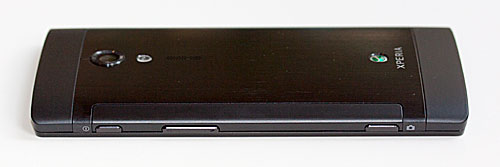
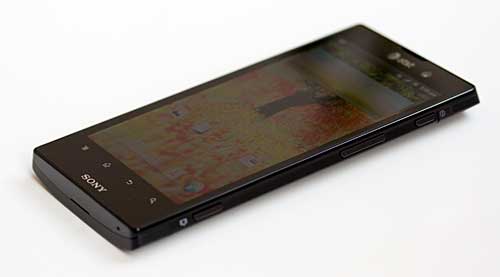
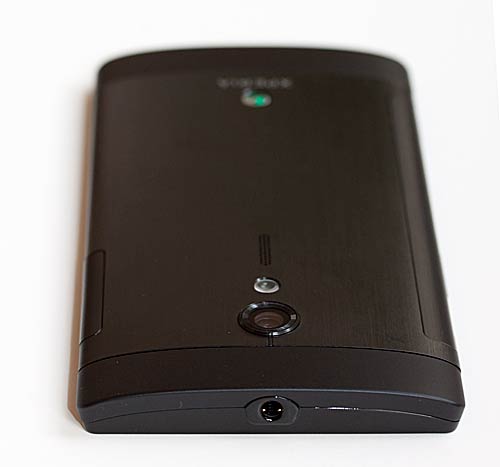
The Sony Xperia Ion is a sweet phone for a great price that's just not getting enough love. For $99 on contract with ATT, you get an award winning design with a sleek glass front and curved metal back, LTE 4G and a 12MP camera. And you thought the $99 Nokia Lumia was a good deal? The Ion tops it for hardware specs. The phone has a 4.6" 720p display with Sony's various marketing names heaped on (Bravia, HD Reality Display) that's simply stunning, and it has HDMI out with an intuitive TV app.


So what's the catch? It runs Android OS 2.3.7 Gingerbread rather than 4.0 Ice Cream Sandwich. That's doubly vexing when Sony recently updated older Xperia models to ICS. As a consolation, they say the Ion will get ICS too. In the meantime, the Sony UI on top of Android is light, and you get a fairly fresh Android experience.


While the latest top dog phones like the HTC One X and Samsung Galaxy S III run on the fourth generation Qualcomm Snapdragon S4 CPU, the Sony Xperia Ion runs on a third gen Snapdragon S3 clocked at 1.5GHz. It has Adreno 220 graphics, and honestly it's no slouch. Human nature and a fear of obsolesce drive us toward the fastest thing we can buy, but the S3 was this spring's top performer and it's still respectable with a Quadrant score of 3100.


Voice quality is excellent: we noted landline clarity on both ends and good volume. Reception is similar to the competition (One X and Samsung Galaxy S III) and data speeds are excellent on AT&T's LTE network.


The star of the show is no doubt the 12 megapixel rear camera with flash. It has a fast f2.4 lens and a Sony Exmor R sensor that can shoot 1080p video and some of the nicest photos we've seen from a phone. Colors are particularly impressive: rich and accurate. We took some light life street shots and were impressed with the camera's low light color and contrast capture. We'll have samples in our full review.


Specs:

4.6", 1280 x 720 LCD (Mobile Bravia)
1.5GHz Qualcomm S3 dual core CPU with Adreno 220 graphics
Micro HDMI and micro USB ports
16 gigs storage
MicroSD card slot
Quad band GSM, triband 3G, LTE 4G
12MP rear camera with Sony Exmor R sensor and f2.4 lens and flash, 16 digital zoom, 1080p video recording, 3D sweep panorama recording
1.3MP front camera
Android OS 2.3.7, upgradable to 4.0 ICS
WiFi, Bluetooth, GPS
NFC
$99 with contract, $449 without contract

Here's our Sony Xperia Ion video review. Our full written review will follow in the coming days

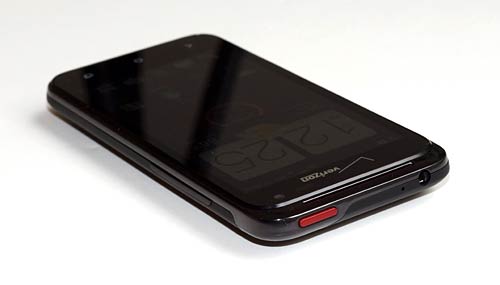
HTC Droid Incredible 4G LTE

Is bigger always better? Not for those of you who simply can't stand carrying today's 
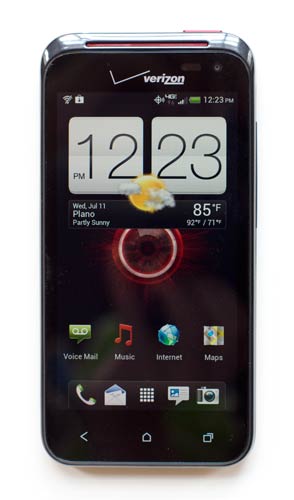
 gargantuan phones. The Droid Incredible 4G LTE is all about livin' small. Downsizing. Less is more. OK, this 4" Android smartphone isn't all that small compared to the now diminutive iPhone 4s. But you will notice that your pocket doesn't have as embarrassing a bulge, and you won't need hand stretching exercises to train for your next phone.


The third generation Droid Incredible by HTC may be smaller than the 4.8" Samsung Galaxy S III and other big boys on Verizon Wireless, but it has plenty of top notch features. A sharp Super LCD display running a qHD resolution, a 1.2GHz dual core Snapdragon S4 Krait CPU and a sharp 8 megapixel camera with BSI sensor and simultaneous 1080p plus still photo recording grace the feature list.


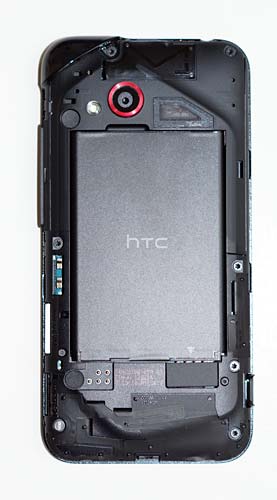
The Droid Incredible 4G LTE runs Android OS 4 Ice Cream Sandwich with HTC Sense software. Unlike the HTC One X, it has a removable back so you can access the 1700 mAh battery and there's a microSD card slot to expand on the 8 gigs of built in storage. There's no dedicated imaging chip here, but the phone is a capable shooter.


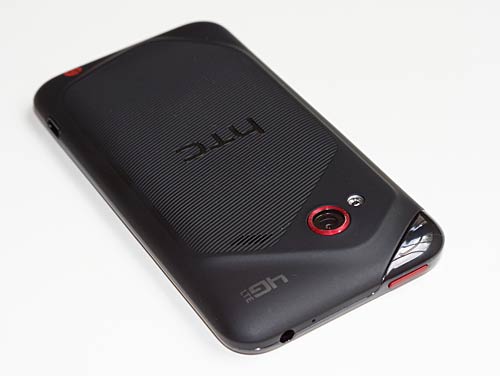
The phone has that distinctive Droid Incredible look with a sculpted waterfall back and red accents (power button, lens ring). The red Beats logo fits right in, and like HTC's other recent Android phones, the Incredible 4G LTE has Beats Audio that enhances audio.


The Droid Incredible 4G LTE sells for $199 with contract, though Verizon's website has a web special for $150. The Incredible's biggest problem on Verizon? The Samsung Galaxy S III that sells for $199 and has every feature except a virtual kitchen sink.

Here's our HTC Droid Incredible 4G LTE video review. Our full written review will follow next week.

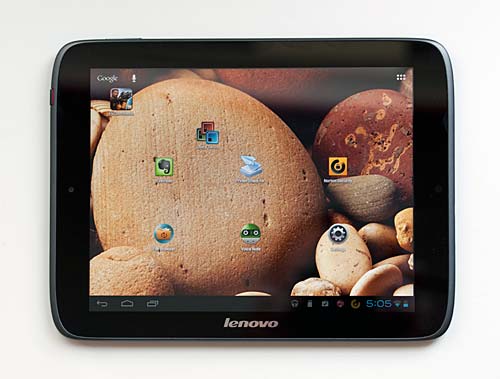
Lenovo IdeaPad S2109 Tablet


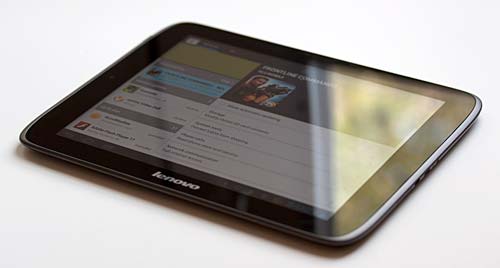
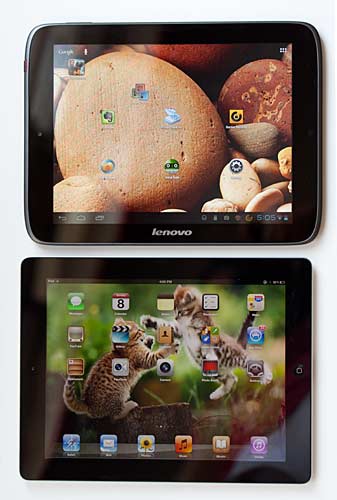
Goodness knows there are plenty of Android tablets on the market now, particularly 10.1" models. So Lenovo decided to differentiate their newest tablet, the IdeaPad S2109 (or simply IdeaPad S2), with a 4:3 aspect ratio 9.7" IPS panel. It runs at 1024 x 768, just like the iPad, and is less oblong than the usual 1280 x 800 Android 10.1" tablet.


The Lenovo IdeaPad S2109 has a bright 420 nit IPS display that's absolutely sharp and lovely. The aspect ratio is better suited to reading eBooks and PDFs, though movies and more recent TV shows will have those big black bars top and bottom. Some folks feel a 4:3 tablet is easier to hold, but I'd say the Lenovo is more pleasant to hold because it weighs just 1.3 pounds and is slim but not painfully skinny.


The tablet runs Android OS 4.0 Ice Cream Sandwich on a 1GHz dual core TI OMAP CPU with 1 gig of DDR2 RAM and 8 or 16 gigs of storage (a 32 gig model is coming). It has a microSD card slot for expansion, a micro HDMI port with HDCP copy protection support, micro USB and a 3.5mm jack.


The Lenovo IdeaPad S2109 and the New iPad


The Lenovo IdeaPad S2 is available now, with a $399 list price for the 8 gig and $449 for the 16 gig. That's not wildly price competitive with tablets like the $399 Asus Transformer Pad TF300, 1080p $449 Acer Iconia Tab A700 and the $449 Toshiba Excite 10 with Tegra 3 quad core CPUs, but Lenovo's website has enticing sales. Right now, the 16 gig model is just $349.

Here's our Lenovo IdeaPad S2109 video review. Our full review will follow in the coming days.


source

Motorola Atrix HD

When a seemingly high end phone comes in at $99 on contract, our first thought is "something has to be missing". Yes, AT&T is very aggressive with their contract pricing, but consider the lovely Nokia Lumia 900: awesome phone, but the hardware specs aren't up there with the $199 phones. The $99 Sony Xperia Ion has an elegant metal casing, a stand-out display and a 12MP camera, but it's running Android 2.3 Gingerbread on a third rather than fourth generation CPU. So what's the story with the bargain priced Motorola Atrix HD?

Motorola Atrix HD

Specs
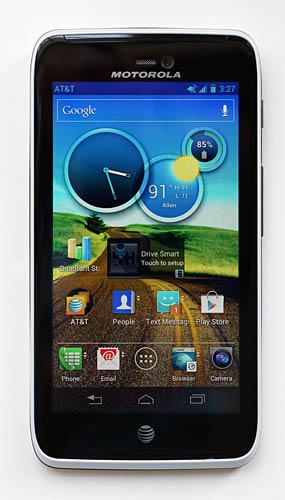
The Atrix HD seems to have it all: Android 4.0 ICS, a lovely 4.5" "ColorBoost" 720p display, the same 1.5GHz fourth gen Qualcomm Snapdragon dual core CPU as the Samsung Galaxy S III and HTC One X, an 8mp rear camera that can shoot 1080p video, dual band WiFi (nice), Bluetooth 4.0 and a GPS. The only thing missing is NFC, but that isn't a huge deal (yet) on AT&T since there's no way to use it for mobile payments.

Design and Ergonomics
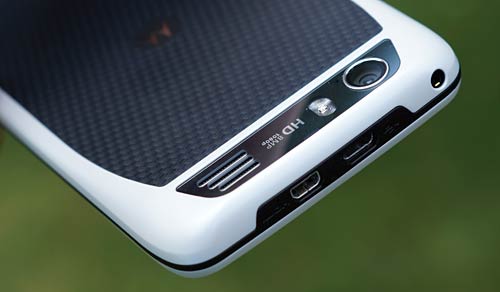
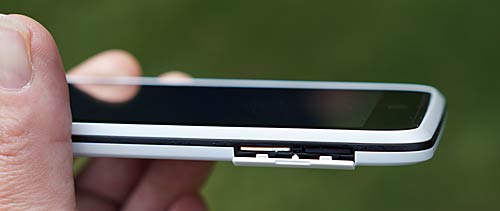
Despite the name, the Motorola Atrix HD is a GSM Motorola Droid RAZR rather than the reincarnation of the last two Atrix Android smartphones on AT&T. It has the beveled Gorilla Glass front and a Kevlar back with the RAZR's distinctive top cap that houses the camera, LED flash, HDMI and USB ports. It's a good looking phone with a sealed casing. That means you can't swap the 1780 mAh Lithium Ion battery since it's sealed inside. There is a microSD card slot on the side though, along with a micro SIM card slot. The Atrix HD's corners are matte and have softer curves than the Droid RAZR, and we confess to prefer the RAZR's edgier design.

Motorola Atrix HD

4.5" smartphones aren't tiny beasts, but the 4.9 ounce Atrix HD is reasonably easy to hold. I find the hand-centric curves of the HTC One X more comfortable, but the Atrix HD is less slippery than the curvy-glossy Samsung Galaxy S III. Despite its slightly smaller screen size, the Atrix HD isn't appreciably smaller than the One X and GS III. 

Motorola Atrix HD

I confess to love the patterned Kevlar back for both looks and texture. The subtly curved Gorilla Glass edges give the phone a more polished look and the black on white stripe on our white model gives visual interest. There's a large speaker grille on the back hump, and this is indeed a loud phone with more fullness than most smartphones offer. The small power and volume controls on the right side are a bit hard to press, but we like having both micro USB and micro HDMI ports (no hunting for MHL adapters). 

Display
The Atrix HD has a 4.5" TFT LCD with ColorBoost (Motorola's marketing term). As the name implies, it has excellent colors that are rich yet not unnatural. The 1280 x 720 display is tack sharp and gets plenty bright. Viewing angles are also wide, though the HTC One X's viewing angles are a bit wider with less glare. Moto's display reminds us of LG's IPS displays, and that's a good thing. As Motorola likes to remind us, since this isn't a Super AMOLED display like the Galaxy S III, there's no Pentile Matrix and resulting smaller number of subpixels. The 326 ppi display is thus sharp with no text jaggies upon close inspection.

Calling and Data
The Motorola Atrix HD has simply excellent call quality. In fact, AT&T's top four Android phones all offer excellent voice (Atrix HD, HTC One X, Samsung Galaxy S III and the Sony Xperia Ion). Incoming and outgoing voice are extremely clear, full and volume is adequate. The speaker is also better than average in terms of volume and fullness, and it reminds us of the original Droid's speaker.

The phone is quad band GSM with 3G and 4G HSPA+ on the 850/1700/1900/2100MHz bands. It has LTE 4G and download speeds averaged 23Mbps while upload speeds averaged 17Mbps in the Dallas area. Those are obviously excellent data speeds that are similar to AT&T's other top LTE Android smartphones.
Reception is solid on 3G and LTE, as we've come to expect from Motorola, and LTE reception is again identical to the top four Androids on AT&T.

Performance and Horsepower
Don't let the budget price fool you: the Atrix HD has the same 1.5GHz Qualcomm Snapdragon S4 "Krait" CPU as the HTC One X and Samsung Galaxy S III on AT&T. That's currently the fastest CPU available on a US Android smartphone, and the Atrix HD indeed feels fast. Motorola's very clean rendition of Android OS 4.0.4 Ice Cream Sandwich no doubt helps speed things along as well. The phone has the usual 1 gig of RAM but only 8 gigs of internal storage (~ 5 gigs available) vs. 16 gigs on the big boys. That's still plenty of room for large app installations, and there's a microSD card slot located on the phone's side so you can further expand storage for media files and documents. Motorola says the Atrix HD is compatible with cards up to 32 gigs capacity.

Benchmarks
Quadrant GLBenchmark 2.1Egypt Offscreen AnTuTu Sunspider JavaScript Test
Motorola Atrix HD 4627 55 fps 6123 1314
HTC One X 5001 56 fps 7074 1617
Samsung Galaxy S III 5102 51 fps 7011 1825
Samsung Galaxy S II Skyrocket 3346 33 fps 5367 2237
Sony Xperia Ion 3126 34 fps 6391 2410

Software: Ice Cream Sandwich
I really like what Motorola has done with Android OS 4.0.4 Ice Cream Sandwich; or more specifically I like what they haven't done. This is the cleanest skin on Android I've seen yet for ICS handsets, and that's a good thing. It doesn't bog down the smartphone or dumb down the UI and try to make it look like Gingerbread so folks won't have to learn a new trick here or there. Motorola's custom square icons are here, but that's pretty much it for significant UI changes. One thing they did add (or rather subtract) is a unique home screen treatment where you start with one main screen and add others, as you desire. You can start with templates or just an additional empty screen. For those who don't clutter their home screens with endless widgets and icons, this is much cleaner and you won't be swiping through unwanted and unnecessary screens.

Motorola's Smart Actions from the Droid series is here, and it offers useful settings customizations based on time of day or locale. You can have it use different sounds and email schedules when at work vs. home, for example. When it's bedtime, it can automatically reduce power consumption by increasing sync intervals.


Camera
Well, it isn't all puppies and roses. The 8 megapixel camera is distinctly average, and this is the one area where the Atrix HD falls short of the One X, GS III and Sony Xperia Ion. It has a bright LED flash and it can shoot 1080p video at 30 fps, but photos lack the sharp detail of the competition. Photos have visible artifacts and both photos and video have oversaturated colors (which some folks may like). It's not a horrid camera; it's just not excellent like the 8MP and higher competition on AT&T.

The Atrix HD has a front 1.3MP camera that worked well for video chat using Skype and Google Talk. Our video partners said we looked clear and bright.

Battery Life
Though I own and use phones with sealed batteries that can't be swapped on the road, I'm not a fan. If you're 9 hours into a business trip and your phone runs out of juice, you're either tethered to an AC outlet instead of getting work done or you're juggling external battery packs that trickle charge the phone. Such is the price we pay for thinner and lighter smartphones.

The Atrix HD, like the RAZR, has a Lithium Ion battery that's sealed inside. We do wish Moto and AT&T had gone with the RAZR MAXX's much more ample battery, but this is a $99 phone. That means a 1780 mAh battery that will get average users through the day with the usual regime of nightly charging. If you're a light user, you'll probably go 2 days on a charge. If you're a streaming video addict, play games with gusto or navigate using the GPS for daily trips, the phone may not make it until bedtime. The same is true of the HTC One X (battery also sealed inside) and the Xperia Ion. The Samsung Galaxy S III's 2100 mAh battery earns 20 to 40 minutes longer runtimes, which isn't much, but it does have a removable battery.

Conclusion
We're really impressed by Motorola's first Android 4 handset for AT&T. It has the stylish good looks of the Droid RAZR with the price tag of a bargain smartphone. The 720p display is very sharp and colorful with good viewing angles and outdoor visibility, and the speaker is above average. Call quality is tops as are data speeds and the phone is fast thanks to ICS and the Qualcomm S4 CPU. The sealed battery isn't ideal for road warriors who need 12 hours of heavy use per day on a charge, but for average use it's adequate (and no worse than the HTC One X). Our only complaint? The camera is decent but doesn't hold up against AT&T's top Android phones. But if high quality imaging isn't your top priority and your budget is tight, the Motorola Atrix HD is a winner. 

Price: $99 with 2 year contract, $449 without contract

Asus Zenbook Prime UX31A

Last year's Asus Zenbook UX31E Ultrabook got top honors with reviewers and shoppers alike. It was a sleek, sexy metal notebook with higher than average resolution and strong performance. It was also one of the first Ultrabooks to hit the market, and that gave it an obvious advantage. Since then many competitors have released Ultrabooks that addressed some of the Zenbook's shortcomings. Asus is an aggressive company that listens to customers and they've not only improved on our complaints, but added a killer feature: a 1080p IPS display.

Asus Zenbook Prime UX31A

The Zenbook Prime UX31A is a 13.3" Ultrabook running on third generation Intel Ivy Bridge ULV CPUs. Asus offers it with Intel Core 1.7GHz i5 and 1.9GHz i7 dual core CPUs, Intel HD 4000 graphics, 4 gigs of RAM soldered to the motherboard and 128 or 256 gig SSDs. We take a look at the Core i5 with the 128 gig SSD for this review (model UX31A-DB51). All Zenbook Prime models have a 1080p IPS display, SSD and backlit keyboard. Yes, even the Zenbook Prime UX21A 11.6" model has a 1080p display!

Asus Zenbook Prime UX31A

Other Zenbook Prime Models
- The first generation Zenbook UX31E had a lower resolution, non-IPS display and Intel Sandy Bridge CPUs. It looks nearly identical to the UX31A.

- The Zenbook Prime UX31A is available with a 1.7GHz Intel Core i5 CPU (UX31A-DB51) or with a 1.9GHz Intel Core i7 CPU and a 256 gig SSD (UX31A-DB72). A classic Ultrabook by Intel's definition with SSD storage, Intel ULV CPUs and an extremely thin and light design.

- There are custom Best Buy and Amazon models as well. The Best Buy model is the same as the DB51 minus the 1 year accidental damage warranty. The Amazon AB71 has the Core i7 CPU and a 128 gig SSD.

- The Asus Zenbook Prime UX32VD has dedicated NVidia GT620M graphics (a lower end dedicated GPU) and both the RAM and hard drive are upgradable. The UX32VD ships with a conventional spinning 500 gig hard drive and a small SSD drive that boosts boot and resume times. 

- Lastly, the Zenbook UX32A (no "Prime" in the name) is a low spec model with a 1.4GHz Core i3 ULV CPU, 320 gig conventional hard disk and a lower resolution display (not a good pick).

* The word Prime= 1080p display, an SSD drive and a backlit keyboard.

Design and Ergonomics
The 2.86 pound UX31A Zenbook Prime is a dead ringer for the first gen Zenbook UX31E, and that's a good thing since that machine was simply stunning looking and well made. The casing is metal and extremely rigid. The combo of a dark metal swirl lid and a brushed stainless steel hinge barrel and bottom look great. The laptop looks and feels like a high quality piece of tech that holds its own against the MacBook Air. Like the Air, it tapers and is 3mm thin at the front and 9mm at the rear.

Asus Zenbook Prime UX31A

The Zenbook Prime has two USB 3.0 ports (one charging), micro HDMI, mini VGA, 3.5mm audio and an SD card slot (SD cards stick out and aren't flush with the casing). Like the last Zenbook, Asus includes a USB Ethernet adapter and VGA adapter in the box and a brown ballistic nylon slip case for the dongles and another for the laptop. 

Asus Zenbook Prime UX31A

Stereo speakers fire from the left and right edges just underneath the notebook, and volume is decent for a small machine. The tiny speaker grilles aren't positioned directly over the oval drivers inside, and I'd bet that reduces potential volume. The UX31A won't win in a battle with HP's Beats Audio notebooks, but sound is full enough that you can enjoy a few music tracks or a movie without running for the headphones or external speakers. Like the previous generation Asus Ultrabook, the UX31A has Bang & Olfusen ICEpower audio.

Despite the all metal casing, the Asus doesn't get terribly hot when doing productivity tasks. Case temps stay in the low to mi -90's Fahrenheit and the palm rest area is typically 90 degrees. When doing productivity work the fan is nearly silent, and when gaming the fan becomes audible but it doesn't roar. CPU temps are in the upper 20's Centigrade when web browsing and using MS Office (that's quite cool).

Keyboard and Trackpad
Asus has greatly improved the keyboard with much better tactile feel and key travel. Really. I spend lots of time writing and the original Zenbook keyboard annoyed me more each week. I've written 5 reviews on the Zenbook Prime keyboard and it has me smiling. It's not as tactilely delightful as the Dell XPS 13 and Lenovo ThinkPad X230 keyboards, but my typing speeds and error rates were good. The keys are backlit and you can control backlight level via Fn keys or let the ambient light sensor handle it for you. Thanks to the rigid casing, there's virtually no keyboard flex, unlike the UX32VD.

The Elan trackpad is improved as well, with more reliable tracking and multi-touch behavior, but palm rejection is weak. I installed the free utility TouchFreeze to improve palm rejection when typing. Pro tip: uninstall Asus Virtual Touch and multi-touch gestures will work much better! After Asus Live Update installed an update for Asus Smart Gesture (Asus' TouchPad driver that replaces the Elan driver), multi-touch gestures were more reliable and native palm rejection improved greatly so I didn't need TouchFreeze. Bottom line: the trackpad works, but like many Windows laptops, it falls far short of the Retina MacBook Pro and MacBook Air experience.

1080p Display

The Zenbook Prime impresses before you open the lid thanks to the elegant industrial design and sturdy feel. Open it up and the matte 1920 x 1080 IPS display seals the deal. The matte panel is simply gorgeous: very bright, lovely balanced colors and high contrast. Text is very sharp and black levels are excellent. Asus didn't skimp here. The 360 nit panel is brighter than most notebooks on the market (disable the ambient light sensor if you really want to blast your retinas). The display will likely set the Zenbook Prime ahead of the competition for some time. Since this is an IPS panel, viewing angles are very wide, and there's no need to angle the display forward and back to find the sweet spot as with TN panels. Whites are wonderfully neutral and the display looks as good as my MacBook Pro with Retina display, though Mac OS X does a better job of fine tuning fonts in Retina-aware apps. Contrast is likewise excellent with rich blacks that don't invert or look muddy.

It wouldn't be an Asus product if we didn't have some light bleed, but to be fair, light bleed in IPS displays isn't uncommon. What is light bleed? The display may have lighter spots near the edges when viewing black backgrounds like the black bars in letterboxed widescreen movies. Our unit, which came from a local retailer, has a small amount of light bleed along the bottom edge, but it's nothing we'd call annoying (watch our video review to see the display showing a pure black image in the dark). Anecdotally, the Zenbook Prime UX32VD seems more prone to light bleed according to user forums. Interestingly, our UX31A's light bleed decreased after a few days, to the point where it became hard to demonstrate for our video review. Perhaps the glue securing the display panel had finally set?

The Zenbook Prime has Intel WiFi and Intel graphics: the happy couple that's required for Intel WiDi wireless display, which is pre-installed. With WiDi and a receiver box that plugs into your home theater setup via HDMI like the Netgear Push2TV, you can stream your display's contents to your HD TV, or use your TV as a second monitor sans wires. For those who prefer wires, there's a micro HDMI 1.4 port on the right side and a 3.5mm combo headphone/mic jack. For those who use projectors and older monitors, there's a mini VGA port and Asus includes a dongle adapter that converts it to a full size VGA port. 


This is a classic Ultrabook, and that means dual core 17 watt Intel Core i5 and i7 ULV (ultra low voltage CPUs) that use less power and generate less heat than their full mobile counterparts used in standard size notebooks. That said, they're more than fast enough for everyday productivity work like web, email, MS Office and even moderate Photoshop work. 

Streaming and local HD video playback work wonderfully and that's much appreciated given the 1080p display. Ultrabooks rely on Intel HD graphics, and in the case of this third generation Intel machine, that means Intel HD 4000 graphics, which is significantly faster than the Intel HD 3000 used in Sandy Bridge models like the UX31E. That doesn't mean you can play Crysis 2 on high settings at native resolution, but casual and older 3D games play with good frame rates and even demanding current games like Skyrim play at 30 fps on low settings and a less stressful 1366 x 768 resolution. Beyond serious gaming, what else wouldn't I use an Ultrabook for? Editing 1080p video on a daily basis. It's fine in both Core i5 and i7 dual core renditions for occasional vacation footage editing, but is too slow for those who edit HD video professionally/frequently. There is no quad core i7 ULV CPU, Intel stops at dual cores.

The machine has 4 gigs of DDR3 1600MHz RAM soldered to the motherboard, so no upgrades are possible. Look to the Asus Zenbook Prime UX32VD for upgradable memory and hard drives. The Zenbook Prime UX31A is available with 128 and 256 gig SATA III SSD drives, and these are made by ADATA and Sandisk. There's no way of knowing which you'll get, since the "Sandforce" sticker that indicates the faster ADATA drive is on the inner box (the same was true with last year's UX31E). That said, the Sandisk drive is much improved over that used in the UX31E, and it no longer means a huge performance drop vs. the ADATA with a Sandforce controller. Our model from a local Microcenter had the ADATA 128 gig drive and the 1.7GHz Intel Core i5-3317U CPU.

Thanks in large part to the SSD drive, our Zenbook Prime UX31A feels very peppy, and Windows boots in well under 30 seconds. Resume from sleep takes just seconds. It scores very high on synthetic benchmarks like PCMark Vantage because of the SSD drive that's so much faster than conventional spinning hard drives, but don't let that fool you: in terms of raw processing power it's not faster than 15.6" and larger laptops with full Intel Core i5 and i7 CPUs. Though we fault PCMark for favoring SSDs so much, it does reflect the perceived performance boost they offer for core functions like launching apps and booting Windows. The machine boots and launches applications much more quickly than a quad core i7 HP Envy or Dell XPS with a conventional spinning hard drive.

Benchmarks
3D Mark Vantage: 2801 (GPU 2310, CPU 7663) on Performance test preset

PCMark Vantage: 12,272  Memories: 7336
TV and Movies: 4625
Gaming: 8920
Music: 13,620
Communications: 12,348
Productivity: 15,158
HDD: 46,609


Windows Experience Index:
Processor: 6.9
RAM: 5.9
Graphics (for Aero): 5.9
Gaming Graphics: 6.4
HDD: 7.9


Benchmark Comparison Table

PCMark Vantage
Asus Zenbook Prime UX31A (Core i5) 12,272
Asus Zenbook UX31E (core i5 Sandy Bridge) 10,021
Sony Vaio T (Core i7 ULV Ivy Bridge Ultrabook) 12,120
Lenovo ThinkPad X230 (Core i5 Ivy Bridge) 8152
Sony Vaio S 13.3 (Core i5, NVidia GT640M LE) 7575
MacBook Pro with Retina (Core i5, NVidia GT650M) 19,174

Battery Life and Networking
The Zenbook Prime UX31A has a 50 watt Lithium Ion battery that's sealed inside. Like the last Zenbook, it comes with a small charger that looks like a gloss black version of the Macbook Air charger. In our tests with WiFi active and display brightness set to 40% (which is quite bright), the UX31A averaged 6 hours on a charge, which is average for an Ultrabook and good considering the machine is pushing extra pixels.

Asus offers 4 custom power plans for performance, entertainment, quiet office and low power consumption. You can tweak these if you like, and we suggest changing the default power management for WiFi: it sets the radio to low power mode, which destroys transfer speeds. A little too power-frugal, Asus!

The UX31A has dual band Intel Advanced-N 6235 WiFi 802.11b/g/n, and range and speeds comparable to other notebooks once we adjusted that darned WiFi power setting. The metal casing didn't cause any problems with download speeds or range. The laptop has Bluetooth 4.0 as well, and 10/100 Ethernet via the included USB Ethernet adapter.


Conclusion
Do we like the Asus Zenbook Prime UX31A? Oh yes, in fact we love it. It has superb build quality, one of the most elegant and attractive designs on the market and that 1080p IPS display will spoil you. The MacBook Air's display will be a let down, and even the super color-accurate Sony Vaio Z 1080p display will seem weak for viewing angles and brightness. The much more typing-friendly backlit keyboard, fast performance and dual USB 3.0 ports seal the deal.

Price: Starting at $1,099 for the Core i5 with 128 gig SSD

Website: www.asus.com

Asus Transformer Pad Infinity TF700

There's nothing like anticipation and low inventory to hype a product. We saw that with the Asus Eee Pad Transformer Prime early this year, and now its successor, the Asus Transformer Pad Infinity TF700 is poised to start another feeding frenzy. While the Prime has its problems, the Infinity TF700 is everything the Prime should have been, and then some. 

Wireless radios work perfectly, ports and controls are more robust and the 1920 x 1200 HD display is one of the best we've seen on a mobile product. The rear f/2.2 camera with BSI sensor and 5 element lens likewise is the best tablet camera on the market. Granted, that might not say much given the state of tablet cameras, but the TF700 really does take excellent photos and 1080p video that far surpass the mediocre Transformer Prime and Asus Transformer Pad TF300 camera.


Asus Transformer Pad Infinity TF700
Specs

The tablet runs on the newer and faster 1.6GHz NVidia Tegra 3 T33 quad core CPU with 1 gig DDR3 RAM and 32 or 64 gigs of storage. It feels fast and is fast running Android OS 4.0 Ice Cream Sandwich, and we can't wait to see how much snappier it gets with Android 4.4.1 Jelly Bean and its touch of Project Butter (Asus has said the TF700 will get Jelly Bean, and knowing them, it will be sooner rather than later). 

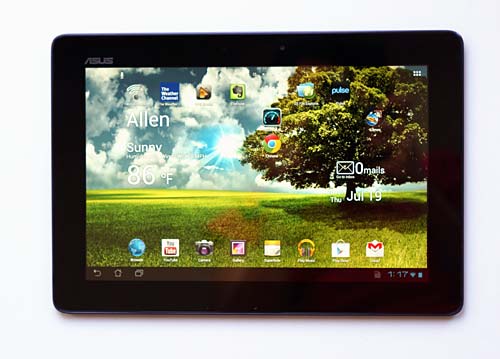
The tablet has Wifi 802.11b/g/n, Bluetooth 3.0 and a GPS (that works). It has a front 2 megapixel video chat camera and a rear 8 megapixel camera. Ports include micro HDMI, the usual Asus proprietary charging/docking/USB port, USB host via the optional keyboard dock or Asus USB host adapter and a 3.5mm audio jack. The Infinity has a full HD Super IPS + capacitive display and a 25Wh Lithium Ion battery. The 32 gig sells for $499 and the 64 sells for $599. It's available in amethyst gray and champagne silver, similar to the Transformer Prime.

Display

Like the new iPad with Retina display, colors are lush and detail is extreme. Images look much more real and text is superbly sharp. Unlike the iPad, the Asus Transformer Pad TF700 has one of the brightest mobile displays available. The Super IPS + display reaches over 600 nits of brightness. That certainly helps outdoor viewability, though the glossy Gorilla Glass 2 clad front reflects plenty in sunlight. 

Is the display night and day different from tablets like the Transformer Prime? Not at first glance. But you'll notice the Infinity TF700 looks more appealing and sharper, yet not as harsh as the Prime whose contrast and coolness amplify sharpness while making things look a bit hard compared to the Infinity. If you own a Prime and are happy with it, there's likely no reason to upgrade. But if this is your first tablet or you're upgrading from an older 1280 x 800 Android tablet with a non-IPS display, you'll definitely notice the improvement. The Infinity's display is sharper and brighter than the HD panel on the Acer Iconia Tab A700.

Design and Ergonomics

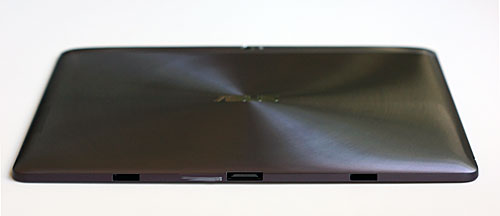
The Infinity TF700 has an aluminum back with a swirl pattern and it's available in amethyst gray and champagne gold colors. It's one of the more attractive tablets on the market, and it's also very thin at 0.39" and light at 1.32 pounds. There's a plastic strip along the back upper edge to improve wireless reception (metal interferes with reception). We've enjoyed good WiFi performance and a tenacious GPS that locks onto satellites indoors even with WiFi off.

Asus Transformer Pad Infinity TF700

As with all Transformers, you can get an optional keyboard dock that turns the tablet into a clamshell notebook style. The dock has a keyboard, trackpad, USB port and an additional battery. Asus states that the TF700 and TF201 Prime docks aren't interchangeable, but we've no problems using our Prime TF201 dock with the Infinity. The new dock has a "TF700-dock" part number on the box, but the dock is labeled TF201-dock. Go figure.

We had complaints with the Prime's port and control design. In order to make the skinny tablet seem even slimmer, Asus used an aggressive taper that's more gentle on the Infinity TF700, and the same is true of the Transformer Pad TF300.

 That makes it easier to operate the buttons without your finger sliding down the taper, and ports can be a bit more robust. The dock connector is a bit sturdier though still delicate enough that it ships with a rubber plug protecting it, and the headphone jack still leaves some of the headphone plug exposed (be careful not to short it with anything metal or you might hear feedback in your ears when using headphones). 

Unlike the Prime, the TF300 and TF700 don't ship with rubber plugs in the two holes on the bottom edge for the optional dock's latches. The holes aren't pretty but apparently users didn't take the rubber plugs out of the Prime and thus couldn't get it into the dock (really?!).
Asus Transformer Pad Infinity TF700
With the optional keyboard dock.

Thanks to its light 1.32 pound weight, the Asus Transformer Pad Infinity TF700 isn't tiring to hold, though we still think that a tablet can be too thin to hold comfortably. The Infinity TF700, like the Prime and TF300, is so skinny that there's little to hold onto. The straight sides on the Toshiba Excite 10 are actually more ergonomic.

The single speaker grille fires from the rear just where you'll likely put your hand when holding it in landscape mode. Volume and fullness are a disappointment and can't complete with the rich and loud Acer Iconia Tab A700 and Toshiba Excite 10. If the room is quiet, you can use the speakers to watch a movie, but if there's ambient noise you'll want to use headphones or portable speakers.

Performance

Asus is once again the king of tablets when it comes to processing speed. The quad core (plus fifth low power companion core) NVidia Tegra T33 CPU is the newer and slightly faster version of the T30 used on other quad core tablets and smartphones. It's clocked at 1.6GHz vs. 1.3Ghz on other tablets including the Transformer Prime and it is indeed slightly faster on benchmarks. The tablet feels very fast too, in fact it's just as fast as my quad core Nexus 7 tablet running Android 4.1 Jelly Bean, an OS that has serious speed optimizations. 

I/O storage speeds have never been top notch on Asus tablets, but in the two weeks I've been using this as my main tablet, I haven't been bothered with occasional hiccups and slowdowns as with some prior Asus models. Asus released a firmware update on July 27, 2012 that improves I/O speeds for those who are having slowdowns when using the tablet while downloading and installing large apps and files. I've installed 50 apps and haven't had performance issues with internal storage.

The TF700 has 1 gig of DDR3 RAM vs. the DDR2 RAM used on most other tablets and it's available with either 32 or 64 gigs of storage. You can augment that with microSD cards (or full size SD cards if you own the dock). We tested cards up to 32 gigs capacity and they worked fine. You can also use USB mass storage devices (USB flash drives and hard drives) that are formatted FAT32 or NTFS via Asus' small USB adapter that plugs into the sync/charge/dock port or the full size USB port on the optional keyboard dock.

As with other Transformer Android tablets, you can use power/speed settings to conserve battery power or run the tablet as fast as possible. The default Balanced setting works for us, offering nearly the same speed as Performance mode. Still, it's nice to have this geeky feature that's normally found on laptops rather than Android tablets.

Benchmarks
Quadrant GLBenchmark 2.1Egypt Offscreen AnTuTu Sunspider JavaScript Test
Asus Transformer Pad Infinity TF700 4915 74 fps 12,229 1903
Toshiba Excite 10 4143 63 fps 11,056 1935
Acer Iconia Tab A700 3646 58 fps 10,536 1958
Asus Eee Pad Transformer Prime 3801 61 fps 9846 1814
Asus Transformer Pad TF300 3425 69 fps 9559 2257

Wireless

The Transformer Infinity has single band WiFi 802.11b/g/n. Asus really worked hard to improve wireless performance compared to the Prime, and the Infinity has very good WiFi performance in terms of reception and speed. In fact, it managed -5db better signal than some of our laptops, and notebooks generally have better reception than tablets thanks to higher powered radios and longer antennas. 

The tablet has a GPS and digital compass that work well. Even with WiFi turned off, our TF700 found 8 satellites in the first floor of a two story home 15 feet from the nearest window, and it got a location fix with 8m accuracy. Nice. It took 20 seconds to get that indoor cold fix with WiFi off, and it took only a few seconds with a warm start and with WiFi on. Outdoor performance when driving was very good.

The TF700 has Bluetooth 3.0 + HS for wireless headphones, speakers and Bluetooth keyboards among other things. It worked reliably in our tests, though we did note occasional audio track delays when watching streaming videos (a common problem with single chip WiFi/Bluetooth equipped smartphones and tablets). Video didn't stutter and audio didn't sputter as a consolation.

Camera

Tablet cameras generally stink. The HTC Jetstream was an exception, but the rest didn't take photos or video that motivated us to wave a 10" camera around. The Infinity TF700 changes all that: it takes photos that are so good I don't care if I look like a dork waving it around. Images are crisp, colorful and lifelike. The camera has some trouble with extreme outdoor contrast, but it's much improved over the Prime and to be fair, many high end camera phones have problems with this. The camera has touch to focus, and autofocus times are good.

The 8 megapixel rear camera has a flash, BSI sensor and a fast f/2.2 five element lens. It shoots very sharp and smooth 1080p video at 30 fps that's good enough to capture special moments and share them with friends on-screen or over HDMI or dLNA to an HD TV. 

Battery Life

The Transformer Pad Infinity TF700 has a 25Wh Lithium Ion polymer battery that's sealed inside. Asus claims up to 10 hours use, and so far we've managed 9 on average with a mix of email, web, YouTube short clip playback and Polaris Office use. If you use the GPS heavily or game, expect shorter battery life. Video playback times are good, and we got through 3 feature length movies at 50% brightness with power to spare. The optional keyboard dock extends runtimes since it has a 19.5 Wh battery, and Asus claims 14 hours which seems on target in our tests with the TF201 dock that has a 22Wh battery. As with previous Transformer models, the battery in the dock charges the tablet and Asus includes a widget that displays both tablet and dock battery levels.

Software

The Transformer Pad Infinity TF700 ships with Android OS 4.0.3 Ice Cream Sandwich. Asus has stated that the Infinity will get the update to 4.1 Jelly Bean, and they've been good about offering OS updates reliably and quickly so we hope it won't be too long.

Asus doesn't muck much with Android's UI, so you're getting a fairly pure experience. They do add their selection of useful applications. These are the same apps that are bundled with the Transformer Prime and TF300 and they include Polaris Office (view, edit and create MS Office compatible docs), Splashtop HD remote (remotely access your PC or Mac's desktop), an app backup utility, App Locker (prevent the kids from running specified apps), SuperNote (rich notes with text and drawing support), Zinio, Press Reader, dLNA, a decently featured but slow ePub ebook reader and Asus Cloud Storage.

Conclusion

Yes! Finally a high end Asus Android tablet that we can love. My two weeks with the Asus Transformer Infinity TF700 have been truly enjoyable. The HD Super IPS + display is simply beautiful and the tablet is very fast. It's been stable as well with none of the "wait/force close" error messages that plagued my Transformer Prime and occasionally befuddled my Transformer Pad TF300. WiFi works well as does the GPS, and the camera is surprisingly super. We continue to like Asus' bundled software that truly are value-addeds rather than bloatware, and we look forward to Jelly Bean since Asus is always quick with OS upgrades.

If you're looking for a high end HD Android tablet with a versatile dock option, fast quad core CPU, USB host and an outdoor viewable display, we recommend the Transformer Pad Infinity TF700.
Price: $499 for the 32 gig and $599 for the 64 gig model

Website: www.asus.com

Archos AV 700

I already knew that reviewing the Archos AV 700 would be a tremendous opportunity. However, I was only starting to realize how hard it would be to give up. I can honestly say that I've never used another product quite like it.
So what exactly is it? Well, the device features a video-game-like directional pad on the left side plus two additional buttons, and play, pause, volume, and menu buttons or the right side. The Archos also has built-in stereo speakers, with one speaker on each side of the screen, in addition to a standard headphone jack. When you first start using the device, though, you'll barely notice any of that because you'll be mesmerized by the device's most prominent feature: its screen. 

Separation Anxiety

"Noooooo!" I screamed, as the delivery man wrested the package out of my tense grip. Alas, it was no use. He yanked it away from me, and now it would be taken back to its rightful owners. I sighed as I realized it was too late.

At 7" diagonally, the AV 700's screen almost feels like a movie theater that you can take with you on the road. Although the 480x234 resolution is not the highest ever seen in a portable device, the gigantic widescreen display just might amaze you before you even turn it on. When you finally do power it up, you'll discover that the screen has a second feiture that is just is stunning as its size: brightness. 

Although it has multiple settings to enable you to conserve the battery, even the mid-range brightness settings stand out with a level of brilliance and clarity rarely seen in handheld devices. Throw in the ability to display 262,000 colors, and the screen as a whole becomes so impressive that you might find yourself just marvelling at the menu screen before you even figure out what capabilities the device actually has. 

Rounding out the unit are the rechargeable, user-replaceable lithiun-ion battery on the back, and multiple USB and audio/video ports on the top. The device measures 4.2" x 8.2" x 0.8", which is just about the smallest (and thinnest) it could possibly be with such an impressive screen. Still, it feels significantly larger than most PDAs and media players currently on the market, so some users may find it a bit difficult to carry around with them, even though a case is also included. The AV 700 weighs only 20.8 ounces, making it even lighter than you might have guessed from looking at it. 

Archos sells two versions of the AV 700: a 40 GB model, which the company says can store 130 hours of video, 100 movies, 20,000 songs, or 400,000 photographs, with a suggested retai price of $599; and an 100 GB, which will hold 400 hours of video, 250 movies, 55,000 songs, or 1,000,000 photos, with a suggested retail price of $799. (Does anyone really need to carry a million photos?) 

Included Accessories
 
The Archos AV 700 includes possibly the greatest number of accessories I've ever seen included with any single electronic product. Most notable is the remote control, which resembles a full-size VCR remote and is almost as large as the unit itself. Since the Archos can output to a standard television, it makes sense to have such a large remote, especially since the remote also functions as a universal remote that allows you to control your television in addition to the Archos. 

The remote runs on two AA batteries, which are included.
Additional bundled accessories include a carrying case, USB and RCA adaptor cables, the "TV Pod," stereo headphones, and the AC adaptor. When plugged in, the Archos recharges its battery (which is free of the "memory effect" some other battery types have). Archos managed to fit an impressively large battery into the AV 700's compact form factor, and as a result, it provides about 30 hours of music playback, or 4 hours of video playback, on a single charge.


By now, you've probably realized that you can use it to watch movies and listen to music. However, it is actually somewhat inaccurate to call the AV 700 a mere "media player;" Archos actually refers to it as a portable DVR (digital video recorder), because you can capture content on the device, in addition to playing it back. 

Archos AV 700
side view

By connecting the Archos to the included TV Pod, you gain the ability to use composite (RCA) jacks as input to the Archos, or the higher-quality S-video connection, if your video output device supports it. The device records incoming video as an MPEG4 AVI, with the capability to reach up to 30 fps with a resolution of 640 x 480. Although I'm still satisfied with my Neuros Recorder 1, I must admit that the recording features of the Archos almost make the Neuros look like a toy by comparison. 

The video created by the AV 700 is crisp and high-resolution (by non-HD TV standards, anyway), and the frame rate, clarity, and accuracy are impressive. While the Neuros is great for catching up on your favorite shows while you're waiting at a bus stop, the Archos takes it a step further, becoming a viable option for converting important videotapes into digital format for archival purposes. 

Using the included adaptors, you can also output video from the Archos to a TV screen (except for Macrovision-protected DVD content), which helps solidify the AV 700's image as a real DVR, rather than a PDA accessory like the Neuros. 

File Formats
 
The AV 700 supports a fairly impressive variety of formats for a dedicated media player. For video, it can play back AVI movies with MPEG4 compression (such as the ones it creates when recording) as well as Windows Media Video; for audio, it supports MP3, WAV, and Windows Media Audio. The photo viewer, meanwhile, can display JPEG and BMP formats. The unit supports protected Windows Media audio and video, which means that you can purchase online content (from stores like the Yahoo Music Store) and use it on the Archos. 

This feature is, unfortunately, only available to Windows users. However, since Microsoft won't open its media protection system to other operating systems, and Apple won't open its FairPlay protection to third-party devices (except the Motorola ROKR and SLVR), Archos didn't really have much of a choice, since there just aren't any options currently available to third-party vendors that would allow the use of protected media on both Mac and Windows. Here's hoping that the DRM wars get resolved in a way that actually benefits consumers. 

Notably absent from the list of supported formats are QuickTime and MPEG movies, AAC and OGG audio, and GIF images. Fortunately, these formats are easily convertible to formats that the Archos does support, assuming the original file does not have DRM. However, one class of file types is missing altogether: eBooks and text formats. Since the Archos doesn't support PDF, TXT, MS Word, any eBook formats, RTF, HTML, or any other similar format, it would not really be suitable as an eBook reader. Although the Archos has never been marketed as an eBook device, and would probably be overkill for reading basic text anyway, this is likely to be a disappointment to at least a few users.


The Archos AV 700 has one feature that I found so amazing that I think it deserves an entire section of this review: USB host. Although users who are not technically inclined may not know what that means, it is likely that they have longed for and maybe even requested this feature for other devices, without even realizing it.
Virtually all PDAs and media players can function as USB slave devices. 

This means that they connect to a computer and act as a peripheral, and are essentially "subordinate" to the computer. However, in order to take on USB peripherals of its own, a device must be able to function as a USB host, which is a capability found on virtually all modern computers, but very few PDAs, and no previous media players that I know of. The AV 700, however, can function as a USB host, and it even comes with a small adaptor that gives it a standard USB "A" port (like the kind you see on your computer).

So what does all this mean? Since the AV 700 has a built-in driver for USB mass storage devices, it means that you can connect a standard USB flash drive (like the Imation I reviewed here [link if possible]), a USB hard drive, or even most USB card readers straight to the Archos and read files from them. The files on these devices can be played on the Archos if they are in a supported format (see above), and you can also copy files back and forth.

 This is a tremendous advantage if you have friends with flash drives or other storage devices, and you want to share files with them without having to go through a computer. It also allows you to transfer pictures directly from many digital cameras, either through a card reader or by connecting the camera itself as a USB peripheral, if the camera can function as a USB mass storage device (most digital cameras can). 

The AV 700 does still have USB slave capability as well, and when you connect it to a computer with USB, it acts as a zippy USB 2.0 High Speed hard drive. 


I think many users will wonder why they should pay $599 or $799 for the AV 700, when they could buy an iPod video 30 GB for only $299. Now, the iPod does not have any recording capabilities whatsoever, and I am not suggesting that they are even in the same category of devices. Still, you could couple the iPod video with a Neuros Recorder 2 (which is more advanced than the version I reviewed, and is designed to partner well with a video iPod) and then buy a video-out cable for the iPod, and you'd still pay a lot less than the Archos costs. 

Obviously, the iPod has a smaller screen and lower capacity, but it is also easier to carry and offers better cross-platform capability. Using the iPod with a separate recorder also, importantly, enables you to watch videos on the road while simultaneously recording more video at home, whereas the Archos obviously can't be in two places at once. Although the iPod's gaming ability is even more limited than the Archos, people looking mainly for a gaming device would probably do better to get a PSP for about $250 (which also works well with the Recorder 2). For that matter, you could even buy a portable DVD player and inexpensive recorder (like the Neuros models) and burn video CDs on cheap blank CD media, which would enable you to watch recorded videos anywhere you go and cost even less. 

However, the above just isn't the point of the AV 700. It is not aimed at users who are ultra-budget-conscious, but rather, users who want the very best. Although other devices may have some similar capabilities, no other device has the AV 700's stunning screen, or its combination of all these features into one purchase. Taking these into account, the price tag is certainly reasonable. 

Consumers on a budget who don't need or want a huge screen and the extra capabilities will probably still want to look at other devices, but for high-end users who want the very best, the AV 700 is not a question of the "most (or least) economical" option, but, rather, it is more like the only option. The fact is that it simply achieves quality levels in some categories that no other device has even attempted. In short, for consumers whose primary concern isn't price, the Archos AV 700 is a fantastic choice. (Hey, wait a minute... isn't the iPod usually at the other end of this line of reasoning?) 


The AV 700 comes with four installers for Windows programs directly on its hard drive: Adobe Reader and Windows Media Player, plus two video editing programs called Virtual Dub and MPEG4 Translator.
Virtual Dub is a popular freeware video file converter that is also available from www.virtualdub.org. It provides the ability to edit and convert certain types of AVI files. Although not a pro-level tool, it is optimized for speed and features a batch processing mode, and is certainly helpful to Windows XP users who buy the Archos. 

MPEG4 Translator is Archos' own tool for converting videos on your computer into MPEG4 format so that you can play them on the AV 700. Again, it is Windows-only. 

In a refreshing and surprising move, Archos has also included one piece of software that is Mac OS X only: an iTunes plugin. On my PowerBook, I was able to install the plugin and view the AV 700 as a source in iTunes, which enabled me to copy music to the device, and also create playlists, from within iTunes. The connection to iTunes worked similarly to PDAs connected via Mark/Space's The Missing Sync (both Palm and PocketPC). As with other plugin-based devices, though, there is unfortunately no built-in ability to update podcasts automatically or use other "iPod-like" features. 

Don't Believe The Hype! Well... okay, Believe The Hype.
 
This is one device that certainly lives up to the expectations created by its specs and pictures. In testing it, I was floored by the screen quality, and I was able to rip my Toy Story DVD using HandBrake on my Mac and watch it full-screen on the device without converting it to any special, proprietary format. The video capture was also simple and effective, and the resulting file was comparable in quality to the original tape I had recorded from. 

The device's connectivity was also effective. I was able to plug it into my existing TV/VCR system without any unusual or unexpected issues, and the USB Host feature worked flawlessly with my flash drives. The AV 700 worked equally well as a USB slave, acting as a fast hard drive when connected to my Mac.

I found myself learning my way around the AV 700's user interface quickly and effortlessly. For example, the device's easy-to-navigate main menu gives you access to the photo viewer, movie player, movie recorder, audio player, audio recorder (the unit features a built-in microphone), recording scheduler, file browser, help feature, and games. That's right: you can actually purchase video games specifically made for the AV 700, load them onto the device, and play them. 

The games start at only $8 and feature 3D graphics, but currently only six games are available for purchase from Archos' site. Still, I'm inclined to think that users looking mainly for a gaming device could probably find a more suitable (and affordable) option than the AV 700. The review unit did not appear to have any games loaded, so I will not comment on the quality or playability of the games themselves. 

As the LCD screens of portable devices have become optimized for indoor use, through transflective technology, users have discovered that many PDAs and similar devices are becoming increasingly difficult to see outside or in direct sunlight. Where other devices have failed, the AV 700... pretty much also fails. 

Although its excellent brightness made some improvement compared to most transflective screens when used outdoors, I still experienced massive wash-out when I tried to use the AV 700's screen under direct sunlight, making the image much tougher to see. Perhaps it is not even possible to design a screen that is beautiful both inside and outside, but for some reason, it seems to me that a "media player" is even more likely to be used outside than a "business-oriented PDA," so I found this issue to be especially frustrating in this case. 

Scheduling recordings using the AV 700 was also fairly straightforward; it includes a simple, VCR-like programming interface where you can set times and channels for future recordings. Although it is capable of holding a very large number of scheduled recordings at once, it does not support repeating programs like "record every weekday" or "record every Monday." 

So how does it change the channel of your VCR (or other video source)? One of the included cables ends in a small infrared lens, which you can attach to your VCR's remote sensor using the included ring pads. This prevents you from having to program both the Archos and your VCR, since the Archos will activate your VCR automatically according to its own scheduled recordings. If you use Yahoo!'s calendar service for tracking programs you wish to record, you can also import your programs to the Archos from Yahoo!.

However, the Archos doesn't have an "Auto Record" mode like the one my humble Neuros has. Such a feature would've enabled it to start recording automatically any time it detects an input signal. This has been a handy feature on my Neuros, since I can use my existing VCR programs (including the repeating ones) without having to duplicate the programs on the Neuros, and without having to connect an infrared sensor. 

On the other hand, the AV 700's method does spare you from having to actually record two copies (one to a videotape and one digitally), which is a side effect of the Neuros' Auto Record feature, but it might've been nice to have an option like Auto Record available on the Archos for users who prefer it.
The UPS Man Cometh (Or, "Will this review EVER end?")

I don't think there's any category where the phrase "not enough" could possibly be applied to the Archos AV 700. It truly goes the extra mile in every feature it has. However, for some people, the device could actually be "too much" - if you are scared off by the price tag or the size of the unit, you might want to consider an iPod video or other device (or combination of devices) instead. However, if you have room for the device in your briefcase and in your budget, then go for it. My only regret is that I don't get to keep the review unit... uh oh, I think they're coming to pick it up.

....
Note: Dramatic scenes in this review have had names changed to protect the innocent, and were also pretty much completely made up.
Note 2: Please do not attempt to plug your USB Flash Drive into Alex Trebek.
Pros:

-Enormous, super-bright screen
-USB Host Capability (!)
-Internal hard drive provides a huge amount of storage
-Simple, intuitive interface
-Elegant, lightweight design
-Provides video capture capability with good quality
-Can output to television
-User-replaceable lithium-ion battery provides long battery life
-Built-in voice recorder
-Includes universal remote
-Includes many other accessories
-Includes plugin for iTunes for OS X, in addition to Windows software


Cons:

-Screen doesn't work well outside
-Screen has that odd matte look like past generation color BackBerry phones, which reduces the wow factor.
-Device size, though impressively tiny considering the huge screen, is nonetheless a bit large for carrying around on a daily basis
-Although the price is reasonable considering what the device offers, it still makes it a tough sell vs. an iPod video or less expensive models from Archos and Creative such as the Creative Zen Vision W or the Archos 604.


Price: $599 (40 gig) and $799 (100 gig) (Archos is reducing the price of both and the new list will be $499 and $599)
Web Site: www.archos.com
 
Support : Creating Website | Johny Template | Mas Template
Copyright © 2011. GADGET ONLINE - All Rights Reserved
Template Created by Creating Website Published by Mas Template
Proudly powered by Blogger